
Orionid Meteor Shower 2026: How to spot shooting stars in Leeds and when the next space event is

Stargazers across Leeds and West Yorkshire are in for a celestial display next week as the annual Orionid Meteor Shower reaches its peak, sending bright shooting stars across the night sky
Another celestial performance is set to take place in the Leeds night sky this week, as locals are asked to wrap up warm and look up for one of the year’s most spectacular cosmic displays as it reaches its peak.
With the recent solar eclipse having captivated residents across the city alongside vibrant Northern Lights displays lighting up local imaginations, the Orionid Meteor Shower is the latest space phenomenon heading for West Yorkshire, promising up to 20 shooting stars per hour.
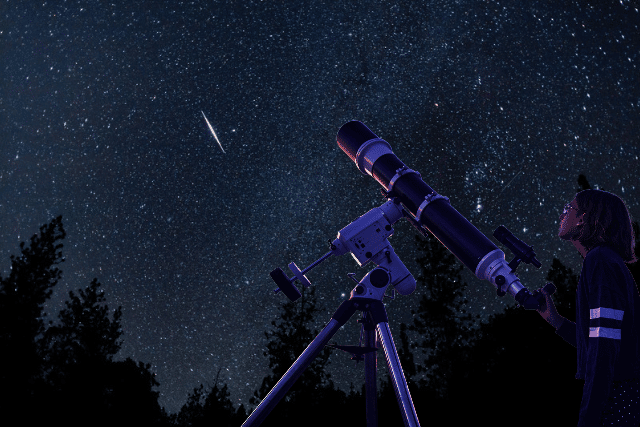

Created by debris left behind by Halley’s Comet, the Orionids are known as one of the year's fastest and brightest cosmic displays.
As dust and rock particles hit Earth's upper atmosphere at speeds of up to 148,000 mph, they burn up to create glowing streaks and vivid fireballs across the night sky.
Here is everything you need to know about watching the display in Leeds - and what celestial events lie ahead.
When is the Orionid Meteor Shower peak?
While the shower remains active throughout October and early November, the Orionids will reach their maximum peak on the nights of October 20 and October 21, continuing into the early hours of October 22.
The prime viewing window across Leeds and West Yorkshire is one for night owls and early birds alike.
When the shower reaches its peak between midnight and 5am, the constellation of Orion rises high in the south-eastern sky as ambient light pollution drops across the region.
Under clear conditions, stargazers can expect to spot around 15 to 20 meteors per hour.
How to spot shooting stars in Leeds
You do not need a telescope or specialised equipment to view the shower; the naked eye offers the widest view of the sky.
To get the best chance of spotting meteors, head outside away from streetlights, face toward the east or southeast, turn off phone screens, and allow your eyes at least 20 to 30 minutes to adapt to the darkness.
If you're looking for the best dark-sky locations nearby away from city lighting, be sure to check out our previous guide to the top stargazing spots across Leeds and West Yorkshire.
What is the next space weather event taking place?
If you miss the Orionids or want to keep looking up this autumn, several major astronomical and space weather events are lined up for the coming weeks:
- Taurid Meteor Shower (Peaking November 4 - 5 & 11 - 12): Known to astronomers as "fireball season," the Taurids produce fewer meteors per hour but are famous for exceptionally bright, slow-moving fireballs.
- Leonid Meteor Shower (Peaking November 17–18): A fast-moving shower known for producing bright, persistent trails across the atmosphere.
- Full Beaver Moon (Mid-November): November's bright full moon will light up the autumn sky shortly after the Leonid peak.
- Northern Lights & Geomagnetic Storms: With the Sun currently in a phase of heightened activity (Solar Maximum), space weather forecasters note an increased likelihood of solar flares and coronal mass ejections. This means further displays of the Aurora Borealis (Northern Lights) could be visible across northern England over the coming weeks.