
From medieval mutilation to 'Quite Shameless' icon: new University of Leeds exhibition traces Vampire lore

This article contains affiliate links. We may earn a small commission on items purchased through this article, but that does not affect our editorial judgement.
Unearthing rare Bram Stoker letters, signed Mary Shelley manuscripts, and medieval Yorkshire bones, a new exhibition at the University of Leeds explores how the vampire transformed from a terrifying rural fear into a polite Victorian icon
Long before Hollywood gave vampires cheekbones, leather trench coats, and sparkling complexions, medieval Yorkshire residents handled the undead threat with a far blunter toolset: cleavers, fire, and post-mortem bone-smashing.
A major new exhibition opening at the University of Leeds' Treasures of the Brotherton Library - titled ‘Quite Shameless: Cultural Reflections on the Vampire’ - is lifting the (coffin) lid on centuries of horror history, tracing the monster's evolution from gruesome rural folklore to Victorian literary sensation.
Drawing on the University's vast archive, including Bram Stoker’s personal correspondence, the exhibition showcases rare manuscripts, signed first editions, and historical evidence of Yorkshire's real-life fear of the walking dead.
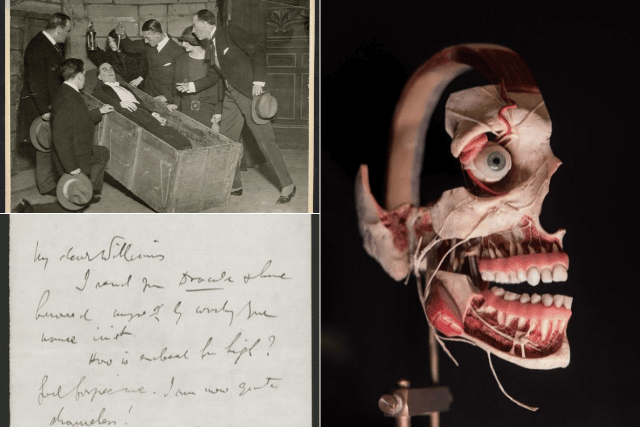

Curator Dr RJ Wade points out that centuries before Bram Stoker put pen to paper, rural communities in Yorkshire were actively protecting themselves against corpse-animated revenants.
Recent scientific research conducted by the University of Southampton on bones excavated from Wharram Percy - a deserted medieval village in North Yorkshire - revealed evidence of posthumous slashing, burning, and deliberate bone-breaking.
"The conclusion of that study was that people in the medieval period had potentially a fear of the dead rising again to enact revenge on the living," Dr Wade explains. "That is your horrifying dead neighbour.
“You are not going to be attracted to that guy."
Inside Bram Stoker's 'Massive Inbox'
Moving into the Victorian era, the exhibition dives into the University's world-class Bram Stoker collection.
"We have about three and a half thousand letters to Bram Stoker - we've effectively got his massive inbox," says Dr Wade. "We've selected a series of 18 letters that are unique because they all mention Dracula.
We can tell Stoker was sending this new novel to his friends, acquaintances, and people he thought were going to be influential, and we get the first sense of people reading this brand new novel and being thrilled and captivated."
Among that correspondence are the very first reader reactions to the manuscript.
"One husband writes that he is reading this novel to his wife in the middle of the night and she's terrified," Dr Wade chuckles. "I don't think he's a brilliant husband for doing that, but you get that real sense that this was terrifying people."
The exhibition takes its title from a newly acquired 1897 letter written by Bram Stoker to a recipient named Williams shortly after publishing his masterwork.
Reflecting on his intense promotional push, Stoker candidly penned: "Lord forgive me, I am now quite shameless."
Displayed alongside the letter is a pristine "first first edition" copy of Dracula from the book's very first print run in 1897.
"It's got this really characteristic yellow and red colour scheme which we've appropriated for the whole graphic identity of the show - it's so striking," Dr Wade says. "It indicated to contemporary readers that this was a really salacious, racy novel.
“The yellow book of the late 19th century was associated with quite spicy content, taking inspiration from French literature which often had yellow covers to signal something a little bit dangerous inside."
Geneva's volcanic ashes & the birth of the 'Polite' vampire
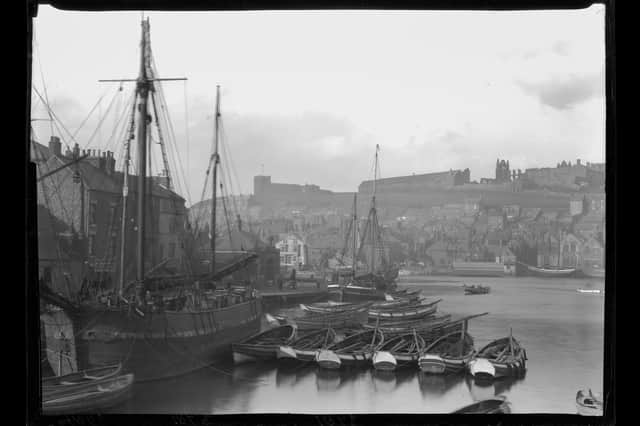
The exhibition also displays artefacts from the famed 1816 ghost story competition at Villa Diodati on Lake Geneva.
"In 1816, which is known as the 'year without a summer' because a volcanic eruption in Indonesia had affected weather patterns across Europe, Lord Byron rented a villa and invited friends including Mary and Percy Bysshe Shelley, and his physician John Polidori," Dr Wade explains.
"Just to while away the hours on a miserable evening, they decided to have a ghost story writing competition."
That rainy weekend produced Lord Byron’s handwritten draft of Fragment of a Novel (held in Leeds), Polidori’s The Vampyre, and Mary Shelley’s Frankenstein - the exhibition featuring a rare second edition signed by Shelley, the first printing to carry her actual name.
"Although this display case might look quite modest, these are the foundations of the most well-known horror icons of our time," says Dr Wade. "Dracula comes at the end of a long lineage, but it starts off a movement that resulted in the cinematic vampire we all know today."
It was during this era that the creature transformed from a rotting corpse into a sophisticated social threat.
"It’s that pull between attraction and repulsion," Dr Wade notes. "The vampire becomes a useful metaphor for queer desire, illicit desire, and economic vampirism—the idea that your boss is extracting your vitality in exchange for capital.
“This is the beginning of the genteel, polite figure that enters your living room and can walk among the middle or upper classes with impunity—the invisible threat."
For Dr Wade, bringing these rare items out of the university vaults is about connecting residents with global literary history.
"I hope it will give people a real foundational understanding of all those vampires they've seen in television and cinema, and what came before that," says Dr Wade. "I hope they get a sense of what special, unique things we have here in Leeds. People can choose to see these items whenever they like in our research centre.
“You just have to make an appointment with us, and these will be yours to pursue - not even in glass cases."
Quite Shameless: Cultural Reflections on the Vampire opens at the Treasures of the Brotherton Library, University of Leeds, on October 27 and runs until May 29. Entry is free to the public, with research appointments available via the library website.