
Leeds Rhinos chief calls for focus on 'high performance and winning' after England's World Cup exit
Leeds Rhinos chief executive Jamie Jones-Buchanan reckons rugby league in England needs to put more emphasis on “high performance and winning”.
The sport is still reeling from the national team’s failure to reach the semi-finals of the current men’s World Cup, going out after the group stage despite victory in two of their three fixtures. Instead, Tonga and Samoa both progressed to the last four, alongside big guns Australia and New Zealand.
Those countries draw their squads from the southern hemisphere’s elite NRL, leading to fears European-based players can’t compete with athletes performing at that level on a weekly basis. Jones-Buchanan, who was capped by both England and Great Britain during his playing career, warned: “Competing shouldn’t be seen as a dirty word in team sports.
“It’s a way to build cohesion and resilience, reach beyond our grasp and celebrate success together. We’ve got to get back into youth development and grassroots, get more kids playing the game and take those principles with us.
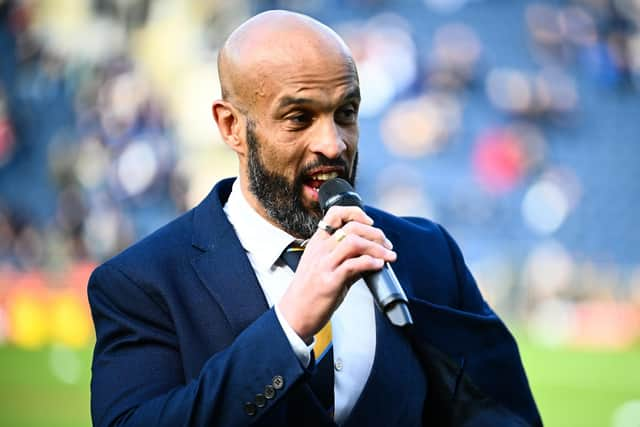


“That’s not a short-term fix, but we should be a nation that can pull 25 players together to compete on the biggest world stage. I don’t think that’s a long-term project if we make that ambition a priority and use language that endorses it.”
He added: “British Olympic sport’s transformation after a disastrous Atlanta Games in 1996, culminating in the success of London 2012, Rio 2016 and beyond, shows what a clear focus on winning, backed by investment and higher standards, can achieve. England’s World Cup exit should prompt rugby league to put those standards at the centre of its attention, because that hasn’t been the game’s focus.”
The make-up of Super League in 2027 has yet to be confirmed, but the competition is widely expected to increase from 14 to 15 teams, which some critics feel will further water down the on-field quality. The Leeds chief stressed: “I don’t fully buy into the idea that 15 teams will dilute the competition indefinitely.
“If we can inspire young people to compete and develop a high-performing mindset - and encourage clubs to invest in growing our own talent - we can soon ‘pull’ players into that gap. The alternative is we have no room for good kids in time. The narrative, the rhetoric, what we talk about is very rarely on-field content and being great. Success markets itself.”