
Leeds still bears 'psychological scars' of 7/7 bombings says imam - 20 years after shock of attackers coming from city

Leeds still bears the “psychological scars” of the 7/7 bombings, a senior imam has said, as he reflected on the lasting disbelief that the perpetrators came from the city.
The devastating terror attacks on July 7, 2005, saw four suicide bombers target London’s public transport system during the morning rush hour, killing 52 people and injuring more than 700.
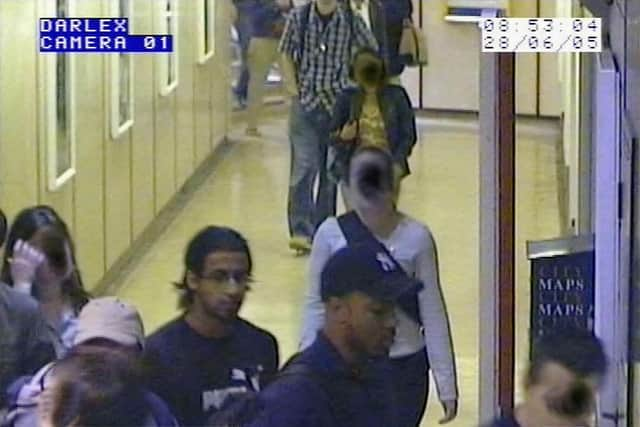

Two of the attackers, Mohammad Sidique Khan, 30, and Shehzad Tanweer, 22, were from Beeston, while a third, Hasib Mir Hussain, 19, lived in Holbeck.
It brought global media attention to Leeds, casting a spotlight on its Muslim communities and leaving residents to confront a wave of suspicion, fear and grief in the aftermath.
Qari Asim MBE is the prayer leader at Makkah Mosque on Thornville Road and was living in Leeds at the time of the bombings.

“The tragedy of 7/7 sent shockwaves through the nation, including for Muslims who were all united in their grief and solidarity,” he told the Yorkshire Evening Post.
“For Muslims in Leeds, there was another layer of grief, because the perpetrators happened to come from the city and from within the Muslim community.
“To this day, we’re bearing the psychological scars caused by the fact that someone living within our community could have been radicalised to the extent that they were willing to take an individual’s life.”
The city of Leeds was thrust under the national spotlight in the wake of the terror attacks and that scrutiny, Mr Asim said, was felt particularly intensely by Muslims.
“There was a huge sense of collective guilt with the blame on Muslims, as if somehow they were all aware of what was going to happen and how it was going to happen,” he said.
“Muslims were at the epicentre of suspicion, blame, and hostility - and found themselves having to prove their loyalty to Britain.”
As part of commemorations this year, Mr Asim said a workshop was held with those who were children at the time of the attacks to understand how their lives had been shaped.
He said: “Initially, they felt Muslims were being blamed, profiled, and marginalised. We also heard they felt there has been a significant increase in Islamophobia over the last 20 years.
“Those bombers were carrying rucksacks when they were on public transport, so for a long time - and even to this day - we hear about Muslims being profiled when they are carrying a rucksack.”
While the attacks placed Leeds in the international spotlight for the wrong reasons, Mr Asim said the city showed strength and resilience.
“Leeds was profoundly affected by the tragedy,” he said. “It was so close to home, in terms of the perpetrators coming from here - but I think the city emerged showing solidarity, unity, and hope.
“Although nationally, there was a strong sense of blame, profiling, and surveilling the Muslim community, I think locally people really stood by each other. Leeds being a passionate city helped drown out that narrative.”
Despite progress, he said anti-Muslim sentiment has not gone away.
“Islamophobia has continued to spike everywhere, including in Leeds,” he said.
“I think early on, that was because the perpetrators [of the attack] were from the Muslim community and, as a result, Muslims were stereotyped. But in recent years, I think Islamophobia comes as a result of ultra far-right extremists conflating criminality with the faith itself.”