
Subscription shake-up - what businesses need to know



Yorkshire based LCF Law experts today explained what tougher new subscription rules will mean for businesses – and the steps they should take now to prepare.
New measures aimed at easing the cost-of-living crisis will bring forward tougher rules on subscription contracts, giving businesses less time to prepare.
That’s the message today from Yorkshire-based LCF Law, which is strengthening its presence in Leeds from its city centre office at 33 Park Place. The well-established firm, with offices in Bradford, Harrogate and Ilkley, has the following advice.
Prime Minister Andy Burnham has announced that new “easy to exit” subscription rules will take effect from January 2027.
The government says the reforms will help households avoid paying for services they no longer want, while creating a fairer market for businesses that already treat customers transparently.
The measures are included in the Digital Markets, Competition and Consumers Act 2024 (“DMCCA”). Businesses offering subscriptions will be expected to provide clearer information before customers sign up, issue regular reminders before renewal, and make cancellation straightforward, timely and cost-effective.
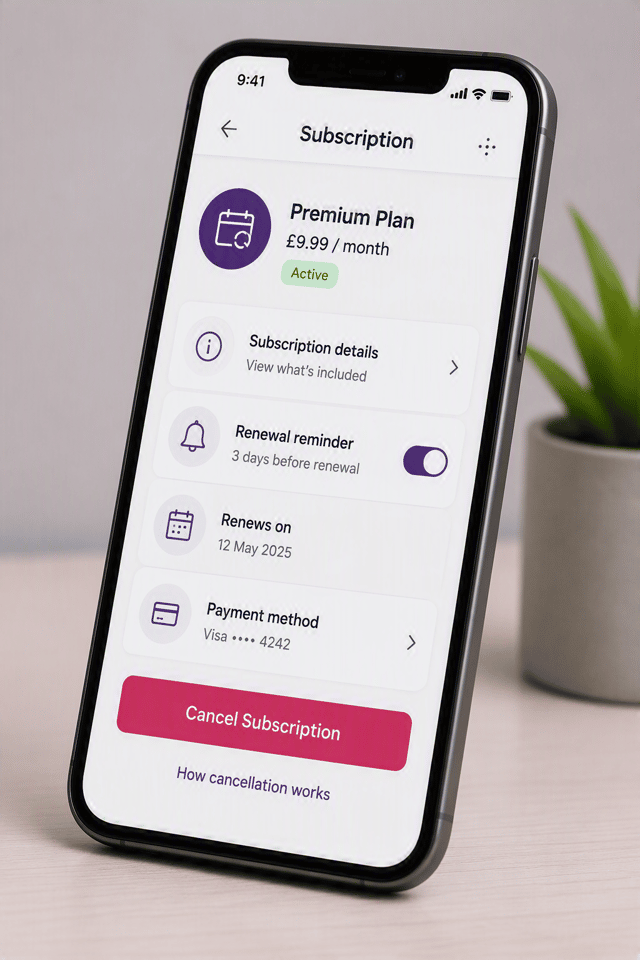
Alongside a crackdown on misleading "pretend prices," the government is introducing new rules specifically targeting subscription contracts. Building on existing consumer law, businesses will be required to give consumers clear “key” pre-contract information before they sign up, rather than burying renewal terms and price increases in the small print. Businesses will also have to send regular reminder notices ahead of a subscription renewing or a free or discounted trial converting into a paid plan, so that customers are not caught out by a payment they had forgotten about or never properly agreed to.
Perhaps the most significant change concerns cancellation itself: subscriptions will need to be cancellable through a straightforward process so that leaving is as easy as joining, rather than forcing customers through lengthy phone calls or convoluted account settings to exit a contract.
Where a consumer signs up online, they must be able to cancel online.
Consumers will retain the existing 14-day cooling-off period upon sign-up of contracts online, over the phone or on the doorstep. Under the Act, that right will apply regardless of how the consumer signed up to the subscription contract.

Consumers will also gain a new 14-day “renewal” cooling-off period after a free or discounted trial ends or a subscription contract auto-renews onto a term of 12 months or more, giving them a genuine chance to cancel even after the renewal has already taken effect. Certain cultural and heritage memberships will be excluded from these requirements.
The Act introduces various other new measures, including (i) prohibitions on “drip pricing”, which occurs when consumers are shown an initial price for a good or service, only for additional fees to be revealed (or “dripped”) later in the checkout process, and (ii) prohibitions on fake customer reviews.
What should businesses do now?
Businesses selling subscriptions to consumers should not wait until the deadline. Now is the time to review the full customer journey from marketing and sign-up to billing, renewal and cancellation and identify where systems, communications or contractual terms may need to change.
- Check that pre-contract information clearly explains price, duration, renewal terms and any change after an introductory offer.
- Plan compliant reminder notices and ensure operational systems can send them at the required time.
- Test cancellation routes so leaving is as simple as joining, including where customers subscribe online.
- Review promotional pricing and discount claims to ensure they are accurate, evidenced and not misleading.
- Update terms and conditions, internal procedures and staff training, to reflect the above.
The consequences of getting consumer compliance wrong can be significant. The DMCCA gives the Competition and Markets Authority direct enforcement powers, including the ability to impose a penalty of up to £300,000 or 10% of a business’s global annual turnover, whichever is higher, for an infringement of consumer protection law. Further penalties can apply for breaching undertakings or directions and for continuing non-compliance.
How we can help
Our Commercial & Digital team helps businesses turn regulatory change into practical action. We can review subscription models, terms and conditions, renewal communications, cancellation processes and work with businesses to implement proportionate solutions.
For advice on the Digital Markets, Competition and Consumers Act 2024 or assistance with your terms and conditions, contact James Sarjantson (on 0113 201 0401 or [email protected]) or Thomas Taylor (on 0113 201 0407 or [email protected]).