
The human touch: Why 30 years of Norman Records is the antidote to digital noise

As Norman Records marks 30 years, founder Phil Leigh reflects on the journey from typewriter mailing lists to surviving the digital age - and why Slint’s ‘Spiderland’ is a must.
This year, Norman Records is celebrating 30 years of existence; a milestone that defied the ‘safe’ logic of the digital age, despite an early embrace of it for convenience in the mid-90s.
To understand how they did it, you have to look back at 1996, an era defined not by fibre-optic speed, but by the rhythmic clack of a typewriter.
"I used to have a typewriter," Phil Leigh, the founder of Norman Records, tells me. "I would basically type lists out, take them to Staples, get them copied up, and then send them out to people."
There was no 'save' function, no 'copy-paste’ - every month, the ritual began from scratch.
"It would take me days to type these lists out because I didn’t have a computer or anything to save them on. Every time you’d do them from scratch," Phil recalls.
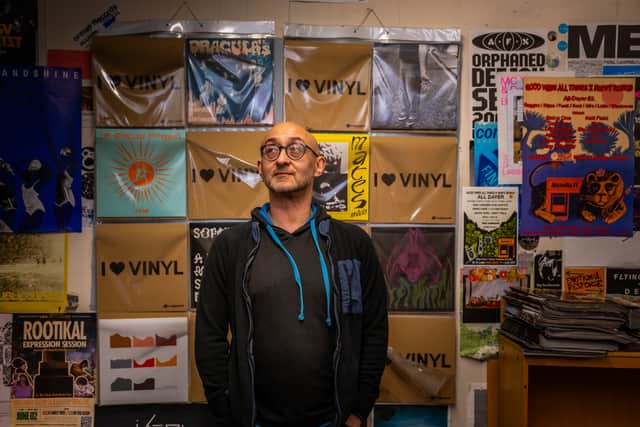

This manual grind (taking checks and postal orders through the mail) built a filter that a computer can’t replicate, especially in a modern era of music where we are perhaps "glazed" by streaming platforms that choose for us.
Phil sees this as a loss of agency. "My concern with them is that people only listen to what the algorithms choose. It takes the thought away."
Phil’s own history with Slint’s Spiderland is the perfect example of that missing intentionality.
He didn't find it via a "recommended for You" tab, but a tried-and-tested method: he read a review.
As Phil recalls: "I bought Tweez from reading a review of it in Melody Maker, and I liked it, and then bought Spiderland on the day it came out from that. There was no like 'you like this, you might like this.'
“You would literally just have to read reviews and talk to your friends because there was no way to hear it really."
That is the ‘human touch’—the active choice to seek out the lesser known rather than what a suggestion ‘thinks’ you’ll like next.
That’s not to say Phil has an extreme issue with streaming: "I don’t think the streaming services are bad for discovery of new music," he admits.
"I mean, I think streaming is a fine way to do it, to listen to stuff."
Passivity over intentional music listening
Phil’s reservations about streaming aren’t with the convenience, but with the passivity that often follows it.
Phil points to his daughter’s ex-boyfriend, who listens to an album a day but ignores the "recommended" tab to seek out Swans, King Crimson, and Pink Floyd on his own terms, as a rare example of modern intentionality.
"I thought that’s a really interesting thing to do, especially for someone at such a young age, really," Phil says.
It reminded him of his own "Staples circuit" days: the constant, active hunger to find what's next.
That intentionality is what Phil fears is being flattened by the "background music" of the algorithm: "I think it takes the thought away," he explains, noting that without a prompt, many listeners now struggle to decide what to play next.
He finds hope in the outliers, like the teenagers devouring an album a day by looking elsewhere to find what a "classic" actually is.
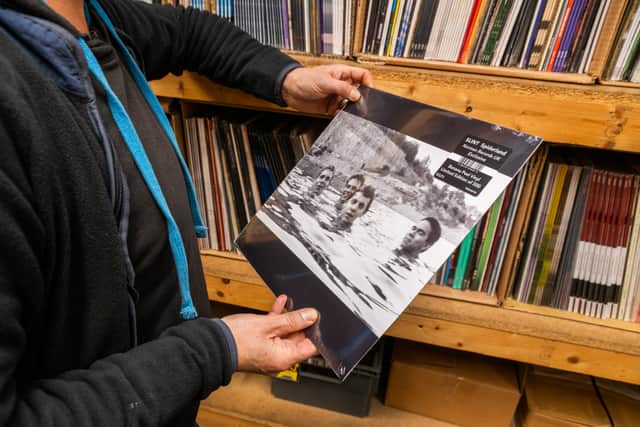
"It kind of reminded me of what I was like when I was younger because I wanted to hear... always getting excited, I’ve heard that, what’s next, and just constantly wanting to move onto the next thing," Phil says.
Which is why the five releases that Norman Records have chosen for the 30th anniversary have a particular, curated resonance to them; they are the albums that made the staff fall in love with music in the first place, and Phil hopes others will experience those same feelings.
There was one of those birthday records in particular that was being discussed between us throughout our chat.
“So, why Spiderland by Slint, Doolittle by Pixies, Throbbing Gristle?” I asked Phil.
“It’s the records we all kind of have fallen in love with at the time, which were important to each staff member and us all collectively".
They are the "pivotal moments" when a record arrived, and everyone was actually excited to go and put it on; a feeling that is increasingly rare in a world of advance digital promos and spoiled surprises, but one that with the rise of tangible products once again, means that the curation aspect Norman Records continues to provide has become as important as ever.