
Black magistrate encourages people from diverse backgrounds to volunteer to help their community
Magistrates come from more diverse minority ethnic backgrounds than ever before, but further work needs to be done says a leading black businessman.
With a system under pressure, the Ministry of Justice is on the lookout for new volunteers from a range of backgrounds to serve as magistrates in Yorkshire.

This key role in the community helps deliver justice and provides individuals with great life skills to help at home or in the workplace.
As of 1st April 2025, ethnic minority individuals constituted 14% of all magistrates (a five percentage-point increase from 2015 when 9% declared themselves as from an ethnic minority). More specifically, Black or Black British individuals constituted 4% of magistrates.

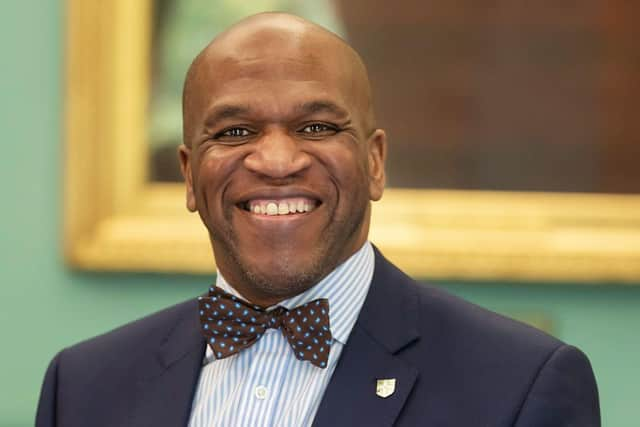
Dr Delroy Beverley who sits as a magistrate in West Yorkshire, is the child of Windrush generation immigrants. Growing up he experienced significant racism throughout his education and professional career.
Dr Beverley holds a significant number of professional, academic leadership and finance qualifications and was the first in his family to study at Oxbridge. He has forged a successful corporate and third sector career for himself across multiple sectors, including health, housing and the arts as a chief executive and non-executive director.
His achievements include making history as the first person of colour to chair a European University Business School board, and in 2020 he became the first person of colour to be appointed as regional chairman of the Institute of Directors in Yorkshire and the North East.
Dr Beverley said:"I feel incredibly fortunate to have had such a varied and successful career. However, what has always remained central to my purpose is the drive to help our communities.
“Black communities across the world have shown extraordinary resilience in the face of adversity. From overcoming centuries of oppression to leading movements of liberation and progress, these achievements remind us that strength comes from unity. Today, we celebrate not just survival, but triumph, creativity and leadership.
“The opportunity to represent the community as a magistrate in a very positive way helps with that legacy of hope. The younger generation, regardless of their colour, should use my own life story as theirs, because their story is mine, and my story is theirs.
Dr Beverley is keen to help the Judiciary increase its ethnic diversity. He describes being a magistrate, and representing the crown, as a privilege with purpose.
He says through him, and many other black magistrates, there is an opportunity to change things for the better while serving as role model for all generations, especially those less fortunate.
He added:“Knowledge is rare gift that must be shared with others. I often leave at the end of a long day in court feeling that rare and unusual energy of giving back to the whole community as a magistrate.
"I want to level the playing field. I routinely reflect on those who came before me, those who sacrificed for me, who gave up so much so I could just be here today. I see my sacrifice is small compared to their sacrifices.
“We all need role models that we can look up to. We all need to be able to see ourselves reflected in our shared society. The term history evolved from the ancient Greek verb that means “to know,” and I hope at the end of this black history month, everyone knows a little more than they did before.”
People do not need any legal background or experience to become a magistrate. They get support from a mentor and legal adviser to help with every case and all new magistrates will have training to understand their role.
What matters are strong communication skills, a sense of fairness, and an ability to consider different sides of an argument in a professional way. You need an open mind, rational thinking, and willingness to work in a team.
Magistrates are volunteers – which means they are not paid – who must serve at least 13 days per year (made up of full days or half days), plus training.
Employers are legally required to allow time off for this important public role. If your employer does not allow paid time off, or you are self-employed, you can claim loss of earnings of up to £134.96 per day.
Sound like you? Make the first step to becoming a magistrate and register now at I Can Be a Magistrate.