


The Leylands occupied an area between Vicar Lane and North Street (to the west) and Eastgate and Regent Street (to the east) with Lady Lane and Skinner Lane being the south and north boundaries. The main thoroughfare was Bridge Street, named from the Lady Bridge which crossed the Lady Beck. It was an area of densely packed poor quality housing for workers mostly built before 1847. They worked in the nearby foundries and mills which sprang up in the 19th century. The area was described in 1889 as “a dank district in that uninviting city”. It was to this area and these workers that Montague Burton came to build a clothing factory on Concord Street with decent conditions to establish a business which later resulted in a larger factory in Harehills. These photo gems showcase life around Leylands in the mid-1930s before the streets were demolished as part of a slum removal programme during the same decade. They are published courtesy of photographic archive Leodis, which is run by Leeds Library & Information Service. They also run heritage blog The Secret Library Leeds, which provides a behind the scenes look at the Central Library and highlights from its special collections, including rare books hidden away in the stacks. READ MORE: Memories of the Leeds suburb which brewed black beer LOVE LEEDS? LOVE NOSTALGIA? Join Leeds Retro on facebook YEP RETRO NEWSLETTER: Sign up for our free monthly email digest of Leeds nostalgia
7. Leylands in the 1930s
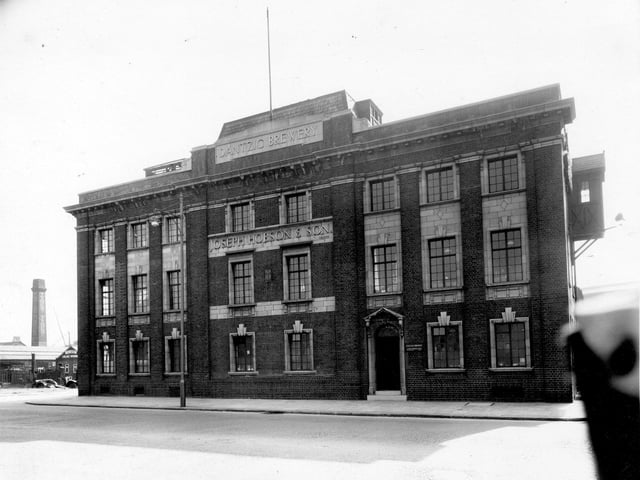
Joseph Hobson and son, Dantzic Brewery, whoich produced 'Black Beer'. The brewery fronted onto Regent Street and had been built across the former east side of Imperial Street, leaving Concord Street to the left and Myrtle Street on the right. The name Danztic was taken from town in Germany, famous producers of Spruce beer and high grade oak barrels used for fermentation. | Leeds Libraries, www.leodis.net Photo: Leeds Libraries, www.leodis.net
8. Leylands in the 1930s
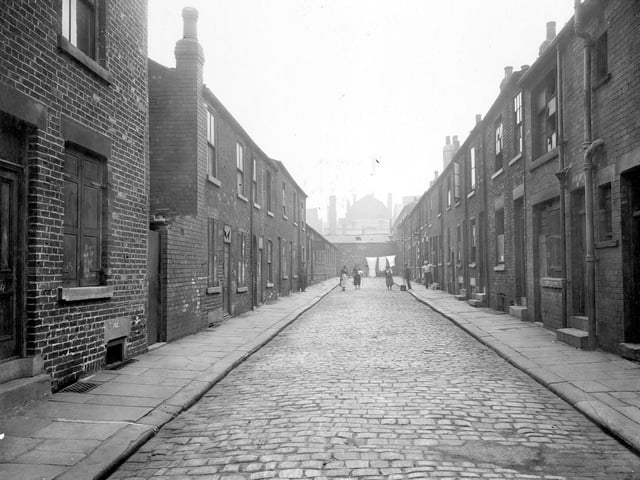
Cloth Street off Regent Street in August 1935. Men and women pose on cobbled road in front of washing line with washing hung across the street. Rows of terraced houses most inhabited with boarded up or broken windows. | Leeds Libraries, www.leodis.net Photo: Leeds Libraries, www.leodis.net
9. Leylands in the 1930s
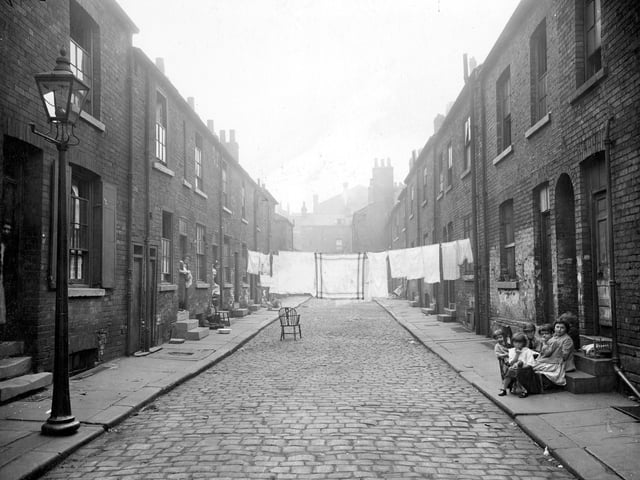
The west side of Cannon Street, which was intersected by Regent Street into two halves. Residents are pictured in the doorways of back to back terrace houses. A line of washing hanging across street, wooden armchair in road. On right, group of children playing on doorstep, with toy bed and doll. | Leeds Libraries, www.leodis.net Photo: Leeds Libraries, www.leodis.net
10. Leylands in the 1930s
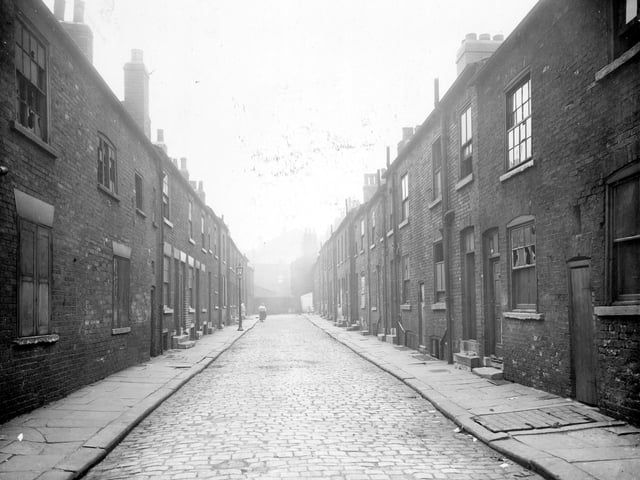
Cannon Street in August 1935. The street was intersected by Regent Street into two halves. Looking down the street, brick property, back-to-back terrace in a state of dereliction, some appear to be still inhabited at the end of the street. | Leeds Libraries, www.leodis.net Photo: Leeds Libraries, www.leodis.net
11. Leylands in the 1930s
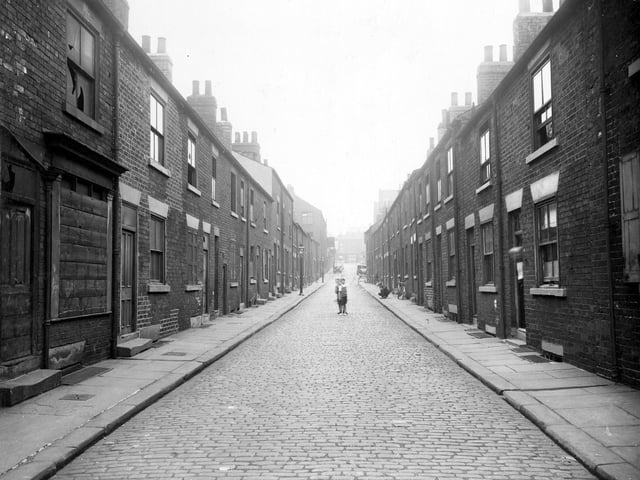
Mainly derelict houses where two children can be seen posing in the middle of the cobbled Concord Street in August 1935. The photograph was probably taken shortly before demolition of these back-to-back properties was due to commence. | Leeds Libraries, www.leodis.net Photo: Leeds Libraries, www.leodis.net
12. Leylands in the 1930s
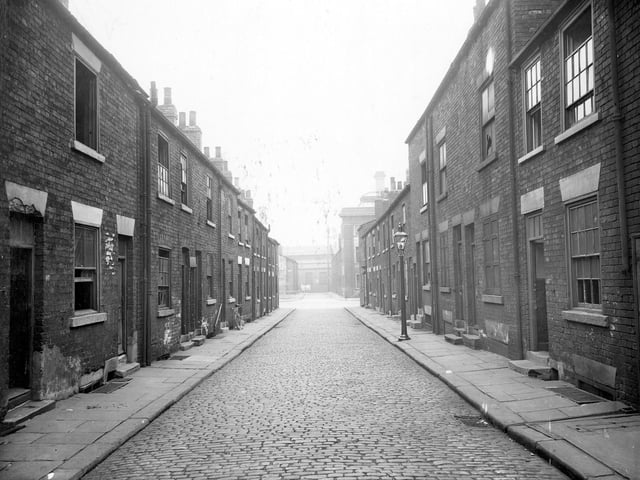
Rows of mainly derelict two storey houses with cellars in Concord Street, and looks towards the junction with Regent Street and beyond, where the next section of Concord Street continues. At the very end, across Lilac Street, works premises can be seen where Star Engineering was located in the 1950s. | Leeds Libraries, www.leodis.net Photo: Leeds Libraries, www.leodis.net