
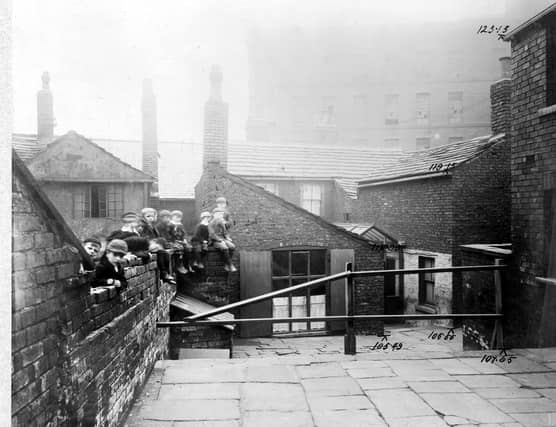


Bank is an area of the city that time erased, that appears to have disappeared off the map and removed from the memory of locals. It was a very poor deprived slum area of the city in the 1800s the vast majority of which was reduced to rubble as part of slum clearance. These photos turn back the clock to the early 1900s and feature the faces of local children fixated with the camera lens and take you down streets which no longer exist as a city tried to clean up its act. READ MORE: 14 intriguing photos take you back to a forgotten corner of Leeds LOVE LEEDS? LOVE NOSTALGIA? Join Leeds Retro on facebook YEP RETRO NEWSLETTER: Sign up for our free monthly email digest of Leeds nostalgia
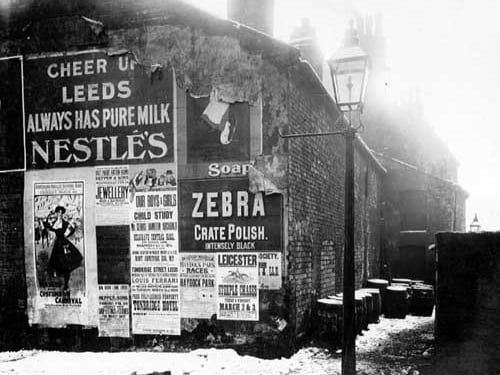
7. Bank in the 1900s
Back Lane off Marsh Lane. In focus is an end wall of a building covered in advertising posters. Adverts are for Nestles milk, a costume carnival at American Roller Skating Rink, Zebra Grate Polish, and posters for forthcoming races. Also a poster advertising various lectures and conferences. In the foreground is a gas lamp with several wooden barrels behind covered in snow. Pictured in March 1909. | Leeds Libraries, www.leodis.net Photo: Leeds Libraries, www.leodis.net
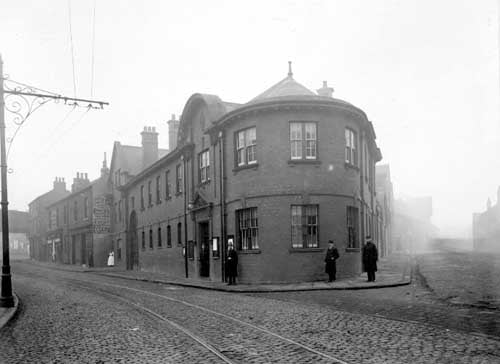
8. Bank in the 1900s
The Police station at the junction of Marsh Lane, left, with Saxton Lane pictured in December 1907. This replaced the old station which was on the opposite side of the road at 111 Marsh Lane. The new station opened in 1907 and contained a mortuary. It continued as a Police Station until 1936 when it was used by the Training Department. It was closed in 1961. After 1961 the Police Station was used as a refuge for homeless families with the cells on the ground floor converted to bedrooms. On the far left is the North Eastern Railway Bridge on Marsh Lane with the Old Railway Inn next to it. | Leeds Libraries, www.leodis.net Photo: Leeds Libraries, www.leodis.net
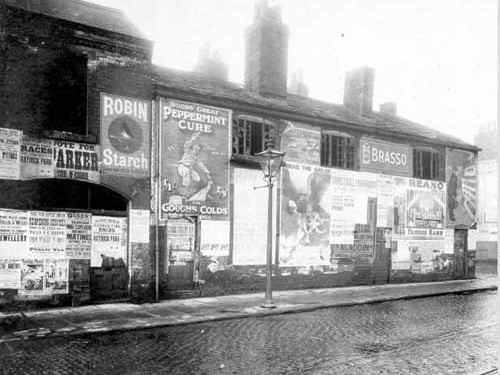
9. Bank in the 1900s
A derelict row of brick buildings on Marsh Lane in March 1909, almost entirely covered with bill posters. Among these are advertising for Robin Starch, Brasso, various theatre shows and public meetings, including an engagement with famous suffragette, Christabel Pankhurst. This was organised by the National Women's Social and Political Union at the Colliseum on 23rd March. A gas lamp stands on the pavement outside the dilapidated mill which has variegated roof slates, and small windows. The road is cobbled and there are tram lines visible. | Leeds Libraries, www.leodis.net Photo: Leeds Libraries, www.leodis.net
10. Bank in the 1900s
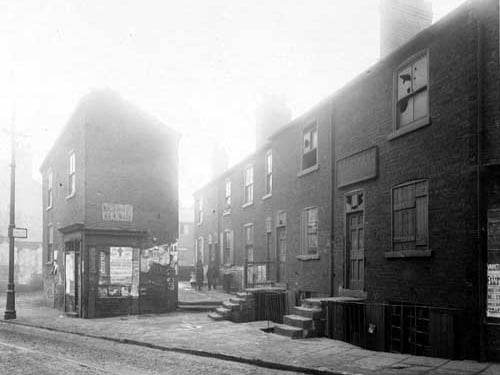
Derelict houses and shops on Marsh Lane in April 1908. To right can be seen J Aspinall, tinner, at number 223. To left is a tramcar stop. Men and children outside one of the houses. | Leeds Libraries, www.leodis.net Photo: Leeds Libraries, www.leodis.net
11. Bank in the 1900s
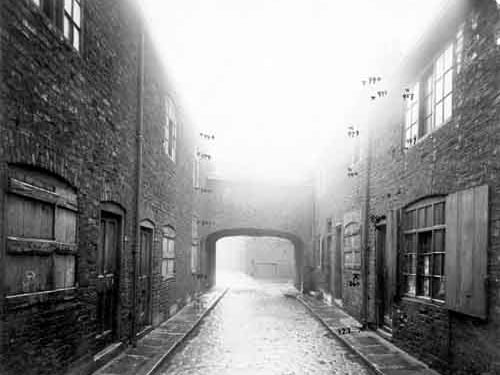
Steander Bow, looking east towards towards Steander Lane in April 1905. The name is a derivation of 'Stony Place'. Including Fearnes Island, this is the area where Sheepscar Beck (also known as Lady Beck, Timble Beck) meets the River Aire. In Medieval Leeds the water flow under Timble Bridge was used to power a water mill. Fearnes Island was named after the owner of nearby Nether Mills. This view shows cottages, with building spanning the road to create 'Bow or Archway'. | Leeds Libraries, www.leodis.net Photo: Leeds Libraries, www.leodis.net