
'No better or worse than expected': Yorkshire hospitality sector reacts to 2026 Autumn Budget

The Chancellor delivered his Autumn Budget on Wednesday, with changes affecting the hospitality sector
Leeds hospitality operators have described the autumn Budget as “no better or worse than expected”, following the Chancellor’s announcement of changes to business rates, energy bills and minimum wages.
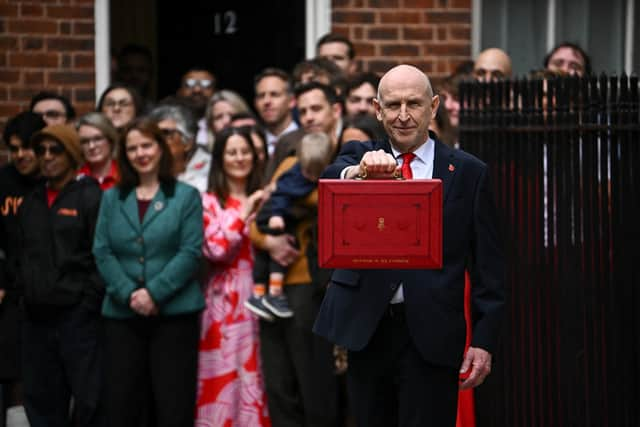
Chancellor John Healey delivered his first Budget under Prime Minister Andy Burnham, announcing a series of measures affecting businesses and consumers.

The Budget included a 3.9 per cent increase in the minimum wage, extending to people aged between 18 and 20, as well as an increase in the threshold for small business rate relief from £12,000 to £18,000.
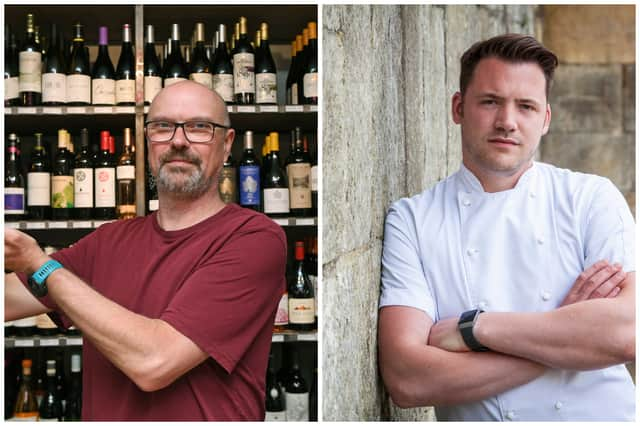
“As a business owner and employer the Budget was no better or worse than expected. It does, however, mean significant increases in costs that will be hard to deal with,” said Chris Hill, who runs Latitude Wine Merchant in Leeds.
“I don’t begrudge paying my staff a fair wage but adding 3.9 per cent to the minimum wage is going to be tough. In the absence of growth - turnover has been stagnant for the last 2 years - I will have to find savings elsewhere.”
He added that businesses were still struggling to absorb increases to employers’ National Insurance contributions introduced by former Chancellor Rachel Reeves.
Support with energy bills was among the more welcome announcements.
“I hope this can go some way to improving consumer confidence while easing the cost-of-living crisis,” Mr Hill said.
“It does, however, seem to match the Chancellor’s offer to reduce rates for hospitality by 20 per cent. Our rates went up by 25 per cent last year, so a 20 per cent reduction in April next year doesn’t really resemble any kind of saving?
“I will commend Healey’s increase on tax to the banking sector, finance has been woefully under-taxed for decades.”
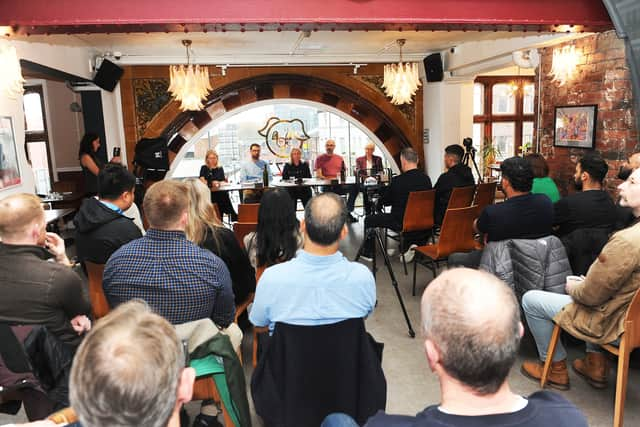
Earlier this week the YEP hosted a roundtable with industry experts to look at what support the city’s hospitality sector needs to thrive and survive.
Campaigners in the hospitality industry have long called for a cut to VAT to bring the UK more in line with countries such as Spain, France and Italy. But with no mention of a VAT cut in the Budget, operators have been left disappointed.
Tommy Banks, who runs Michelin-starred restaurant The Black Swan in Oldstead, near York, is a vocal supporter of the #VATsTheProblem campaign, spearheaded by Tom Kerridge.
In a statement on Facebook, the Yorkshire-born chef said: “Hospitality was let down today. But we cannot let it die on our watch.”
“You can run a busy, successful, high turnover pub or restaurant and still lose money. That is not necessarily because you are bad at what you do. It is because the model is broken.
“Today’s rates relief will help some small businesses, and I welcome that. But it does not come close to covering the increases in wages, National Insurance, food and energy. Much of it is temporary, and it completely ignores the structural problem.

“Andy Burnham said he would argue for hospitality VAT to be brought into line with Europe. He told our industry that the cavalry was coming. Today, he failed to deliver.”
Mr Banks argued that minimum wage rises and changes to employers’ National Insurance contributions had increased the cost of employing a person by 55 per cent since 2021.
Combined with rising food and energy costs, this was putting further pressure on the industry, he said.
“Businesses cannot keep absorbing these costs, but customers cannot afford endless menu price increases either,” he added.
“So we go again, and this campaign must now step up.
“If you work in hospitality, have family in the industry, had your first job in it or simply value your local pub, restaurant or café, we need you with us.
“It is now or never. We must force change before we lose our industry forever.”
Hill echoed these concerns, describing hospitality as “the most labour-intensive sector of our economy”.
He said businesses had been forced to absorb “enormous increases in their payroll while turnover is in decline, thanks to the cost-of-living crisis”.
“For many this means impossible decisions around rotas and redundancies. In the long term, this will reduce opportunities for young people entering the workplace,” he continued.
“Hospitality has always been a great place for young people to enter the job market; I’m not sure that opportunity will be available to the next generation.”