
‘We’re not giving in’: Locals fight to save beloved 112-year-old Leeds social club

A century-old community hub is hoping music, events and a new generation of visitors can help it stay open
Harehills Labour Club has been part of the local community for more than a century, hosting generations of residents for entertainment, friendship and all of life’s events.
Now its committee is looking to the community to help make sure the club is still here for years to come.
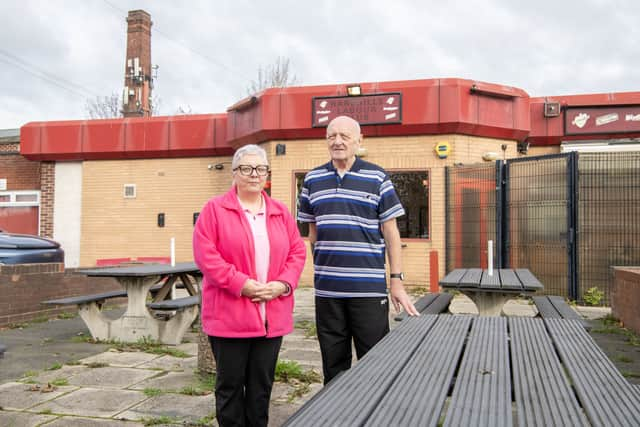

The club has launched a campaign to bring more people through its doors, with its large concert room at the centre of the plans. The room, a feature of the club since its redevelopment in 1983, is being offered for hire for performances, celebrations and other events.
“We decided that our best chance at a second income was to be able to hire this room out, because it’s so big and there’s so many things you can do here,” committee member Leon Flemming told the Yorkshire Evening Post on a visit to the club.
The room can seat more than 200 people and includes a stage, dancefloor, bar, toilets, sound system and projector. It is available for hire on weekdays and weekends, during the day and in the evening, with rates negotiable.
The campaign has already brought in interest. A church group has enquired about using the room for choir practice, and a dance troupe is due to hold its annual presentation night there. The club recently hosted more than 300 people for a Deaf Society event.
Acting secretary Jo Hargreaves said the event showed what the space could offer.
“We had to bunch the tables up and then get all the other tables. In the end, we’d run out of space,” she said.
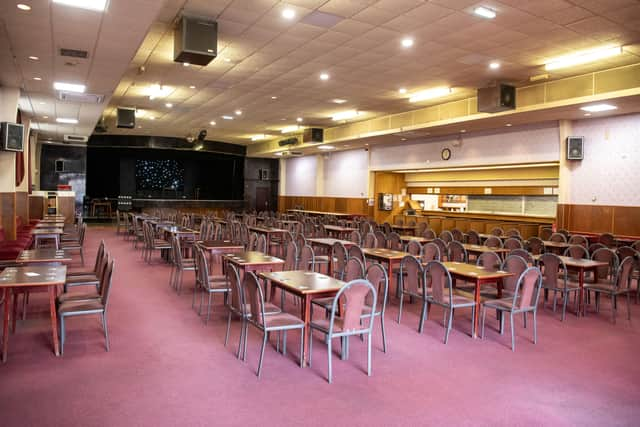
The club hopes the room can also attract local bands and gigs, as well as people who might never have considered visiting a social club. Jo said the committee was open to trying new ideas to bring in younger people and broaden the programme.
“I’ll do anything. I’ll try any road, any avenue, whatever it takes to keep this club going,” she said. “When a club’s been in the community for over 100 years, you want it to keep going.”
The club first opened on its original site in 1914 and was registered as a working men’s club in 1931. It was rebuilt at its current Florence Street location in the late 1960s, then extended in 1983.
Like many social clubs, it has seen membership and use decline over recent decades. At its peak, Harehills Labour Club had around 4,500 members. It now has about 1,500, of which around 450 pay membership subscriptions, according to the committee.
Rising energy costs have added to the pressure. The club’s large rooms are expensive to heat, with electricity bills reaching between £4,000 and £7,000 a month, Jo said.
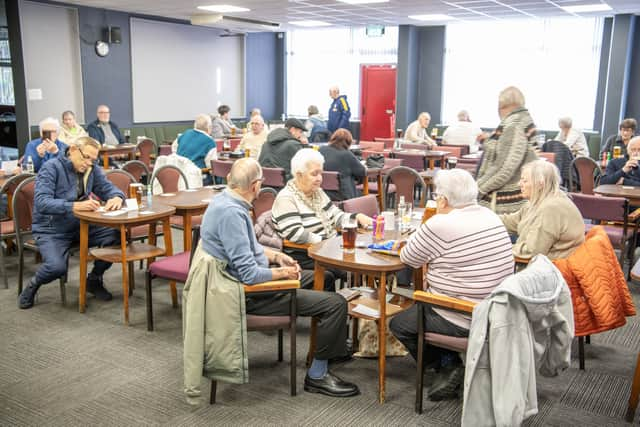
To reduce costs, the committee has moved most weekly entertainment and bingo into a smaller room, keeping the concert room open for its busiest Saturday nights and larger events. Staff numbers have also been cut by half, Jo said.
Some members found the move from the concert room difficult, but the committee says it has had to make changes to keep bills down. The club has no fixed closure date, but Hargreaves said it was trying to get through the end of the year by cutting costs and finding ways to increase income.
For members, the club is about more than a drink or a night out. Steve Hollingworth, who has been coming to the club with his wife Lesley for around 30 years, said it was the friendships that kept him returning.
“We’re like a family in here, and that’s why we come here,” he said. “If it closes, it’ll be sad because we’ll miss all these people. We can go anywhere for a drink. It ain’t about that. It’s about seeing our friends.”
Steve said some older members rely on the club for company and a regular chance to get out of the house. For some, he said, their visit is the highlight of the week.
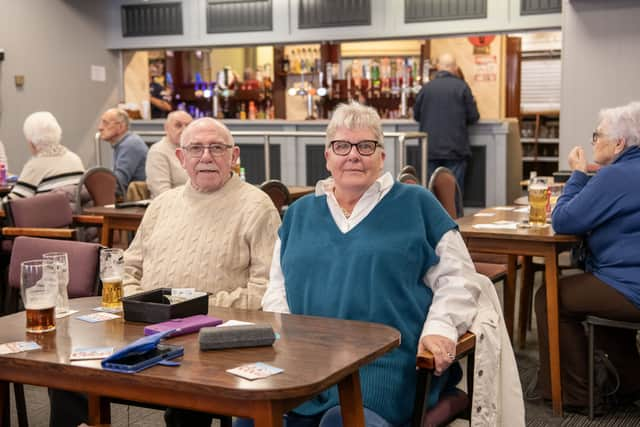
Mary Senior, who has been a member for over 40 years, also described the club as a place where people come together. She said it needed to attract younger members, and encouraged people who had never visited to try it for themselves.
“Try it. They can try it once. If they don’t like it, then they don’t like it,” she said. “But what I say is try it.”
The club’s campaign comes amid wider concerns about the future of social clubs. A Centre for Democratic Business survey from January 2025 found that their numbers had fallen by half since their peak in the 1970s.
But some venues have found new ways to thrive. Brudenell Social Club in Burley has grown from a social club into one of the country’s best-known music venues, earning a number of awards along the way.
Martin Hamilton, director of Leeds Civic Trust, said social clubs had historically played a role well beyond providing a place to have a drink. They were often centres for adult education before opportunities for working people to study in later life were formalised by the state.
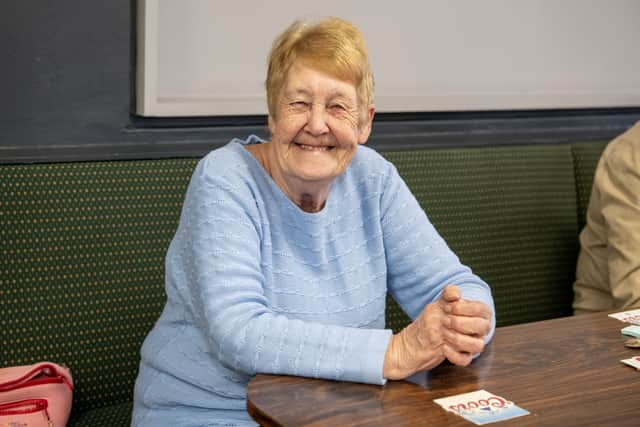
Today, he said, clubs continue to provide venues for groups and activities for people of all ages.
“The heritage value of social clubs should not be underestimated,” he said. “Many of the clubs in Leeds have been active for more than 100 years. For example, Holbeck Working Men’s Club is holds the national record for operating as a club for the longest continuous period.”
“The key must be to ensure that they remain relevant,” Martin added. “Success means adapting to the needs of today’s communities.”
For Harehills Labour Club, making its concert room available to a wider range of events is one way to do that. The hope is that new uses for the space can bring in income, introduce more people to the club and help sustain the community it has served for generations.
Rodney Musgrave, the club’s concert secretary and acting president, said the committee was not ready to give up.
“It’s a shame that we’re in this position, but we’re not giving in,” he said.