
'They called me the crazy man from Nevis': Arthur France MBE on building Britain's first Caribbean carnival in Leeds

Arthur France MBE still remembers the moment that shaped his life. He was five years old, sitting on the veranda of his family home in Nevis on Christmas Day, when he heard the sound of drums approaching up the road.
He ran to meet the Masqueraders, captivated by the kettle drum, snare, and bass echoing through the village. “It captured me,” he tells the Yorkshire Evening Post. “That memory never left my mind.”
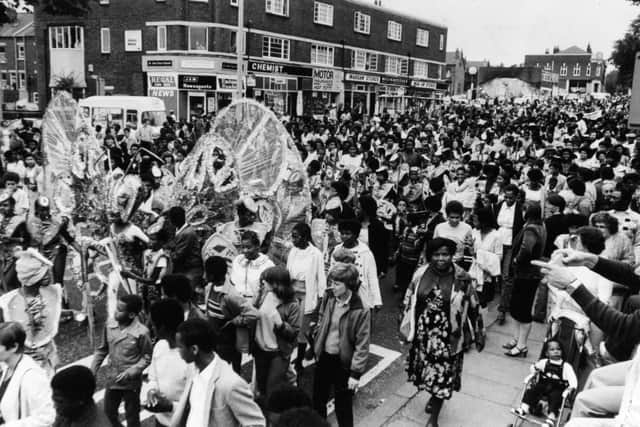
More than seven decades later, that same spark lives on in Chapeltown, where France founded the Leeds West Indian Carnival in 1967 - the first Caribbean carnival in Europe. Now 90, he speaks with the same conviction that carried him through the scepticism, racism and bureaucracy of 1960s Britain.


France arrived in Leeds in 1957 after a long journey from Mount Lily on the small Caribbean island of Nevis: plane to Barbados, boat to Italy, train to France, ferry to Dover, and finally a train to King’s Cross and onwards to Yorkshire.
“For someone from a little island, it was an adventure,” he recalls. Arriving in Leeds, though, was a shock. “It was dark. I saw people sitting outside cafes, and I thought, ‘Don’t they have homes?’”
He moved in with his sister Elaine and her husband, George Archibald, in Chapeltown. The Caribbean community was small, scattered and often isolated, he remembers.
“We had nowhere to go,” he says. “We’d sit around talking about what we were going to do here.”
In 1960, those conversations led to the creation of the United Caribbean Association, formed in France’s tiny bedsit on Grange Avenue with 27 people squeezed into the room. “We were standing on top of each other,” Arthur laughs.
France became secretary, though he never saw himself as a leader. “I was the youngest, but I had plans.”
One of those plans was Carnival. When he first suggested it, the idea was dismissed outright.
“They called me the crazy man from Nevis,” he says. “Some said I wanted to make a fool of us for the white man.”
But France was determined. He applied for police permission and arranged for the officers to visit him at home. “I wanted the upper hand,” he says. The force sent an Inspector from Barnsley - a man who, France recalls, “had never met a Black man before.”
France explained his vision: a celebration rooted in Emancipation, African heritage and Caribbean culture. The inspector eventually agreed.
The first Carnival in 1967 was held together with determination and improvisation. “We had no money,” France says. “We didn’t know how to make costumes.”
They created five queen costumes - Sun Goddess, Snow Queen, Gondolier, Hawaiian Dancer, and Cleopatra - and held a Calypso show despite having no singers. They even made their own steel pans, hammering metal in a Chapeltown yard.
“People thought we were breaking into a safe,” he laughs.

When Carnival day arrived, the turnout stunned them. “It shocked the whole of Chapeltown,” he says. “People came from all over. It was the first of its kind in Europe.”
France’s community work didn’t stop at Carnival. In the years that followed, he became a fierce advocate for education, setting up a computer learning school that sent dozens of Black children to university.
One former student, Delroy Goodison, had been expelled from school at 16. France pushed him to study maths and science. He went on to become a computer engineer and now runs a multimillion-pound business.
“That’s what I’m most proud of,” he reflects. “The youngsters I’ve helped.”

Today, Arthur France remains a proud figure in Leeds’ cultural life. Through his work, he has received honorary doctorates from the University of Leeds and Leeds Beckett University. In the 1997 birthday honours, he was awarded an MBE for ‘services to the Afro-Caribbean community in Leeds’.
But despite his many recognitions, he insists the honours were never the point. “I wanted to show that Black people have worth,” he says. “We are capable.”
As he reflects on nearly seven decades in Leeds, his message to the next generation is simple: “Get acquainted with the system. Understand politics and education. They go together.”
And that childhood childhood memory - the drums on that Christmas morning 85 years ago - still echoes. “It stayed with me all my life,” he says. “That’s where Carnival began.”