
70-year-old plane passenger's death at Leeds East Airport likely down to autopilot fault, investigation finds

An investigation has found that the crash of a light aircraft at a Leeds airport that led to a passenger’s death was most likely caused by an “intermittent fault” with its autopilot.
The passenger, a man in his 70s, died eight days after the crash at Leeds East Airport on April 11, 2024 that saw a Cessna T210M plane land upside down after being unable to take off.
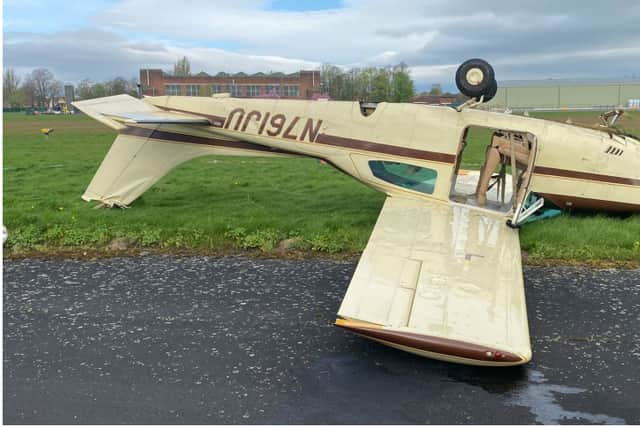

A report released by the Air Accidents Investigation Branch (AAIB) found that the 79-year-old pilot was less “securely restrained” but escaped with only minor head and back injuries.
The AAIB concludes the report by recommending the Civil Aviation Authority to publish guidance and best practice for general aviation pilots on autopilot systems.
The AAID found that the “intermittent fault” with the autopilot system meant that the aircraft’s elevator trim position could could change from ‘Take Off’ to ‘Nose Down’ while undetected, which is what happened in this case.
The pilot, who was not aware of the fault, was unable to balance the competing aerodynamic forces while attempting to take off from the airfield, which was previously RAF Church Fenton.
The report states that the pilot attempted to bring the plane to a halt on the runway after realising that there was an issue but the plane took off. However, “the pilot was effectively unable to control the aircraft”.

The plane bounced several times before coming off the runway before coming to rest inverted and being left “damaged beyond repair”.
The report reads: “The investigation could not determine why the autopilot might have been engaged for the take-off roll.”
The investigation adds that the passenger was unconscious following the crash, which was likely due to him hitting his head on the cabin roof.
The passenger - who was a “close friend” of the pilot and himself an "experienced private pilot" - would likely have suffered a more severe head impact than the pilot as the aircraft landed on its roof.
The report says that pilots of light aircraft take off and land their planes manually and that ensuring the autopilot mode is switched off before take off is part of pre-flight checks.
The AAIB has "recommended that the Civil Aviation Authority publish guidance and best practice on the use of autopilots in general aviation aircraft to improve knowledge and awareness of autopilot functionality, normal procedures, and actions to take in the event of a failure".