

They focus on 1965 and bring into view landmarks across the town as well as shops, pubs and mills which employed generations of local people back in the day. The images are published courtesy of the David Atkinson Archive whose collection is housed on photographic archive Leodis, which is run by Leeds Library & Information Service. READ MORE: Memories of lost Leeds pubs in Morley, Gildersome, Churwell and Drighlington LOVE LEEDS? LOVE NOSTALGIA? Join Leeds Retro on facebook YEP RETRO NEWSLETTER: Sign up for our free monthly email digest of Leeds nostalgia
1. Morley in 1965
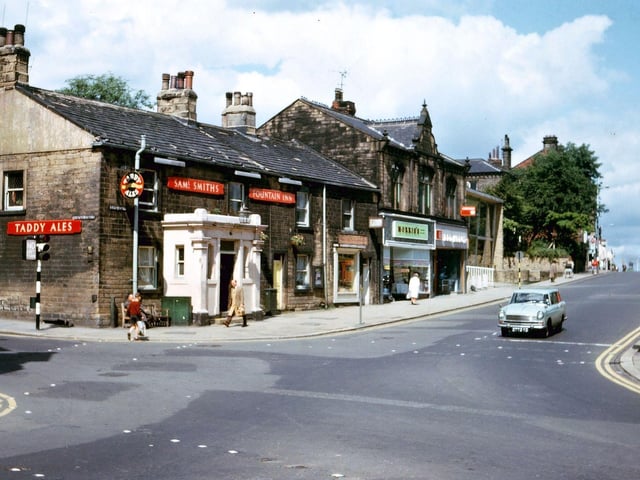
The Fountain Inn in Queen Street in July 1965. The building to the right is the Benefactory which dates back to 1890. Since this picture was taken, the Fountain Inn has been extended and the shop on the right of this 1830s building has been incorporated into the public house and the other small doorway blocked up. This part of Queen Street became pedestrianised in the 1990s and there is now much more street furniture in front of the inn. Photo: David Atkinson Archive
2. Morley in 1965
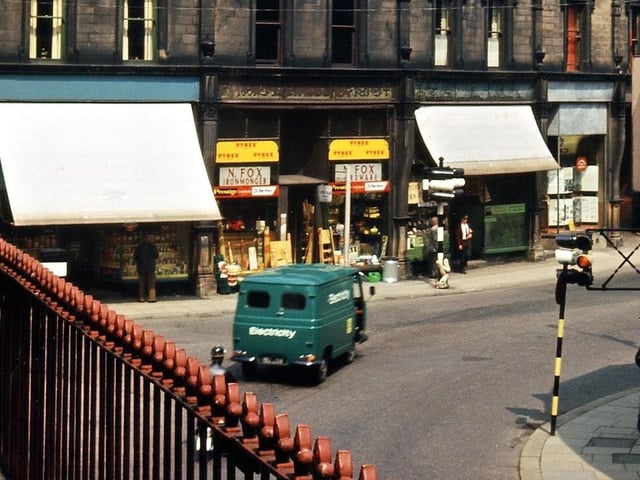
Cheapside, Morley Bottoms, as viewed from the balcony of the 1840s buildings at the bottom of Scatcherd Hill which were demolished for road widening in 1966. The traditional type of shop in Cheapside - grocer, ironmonger, boot and shoe repairer and insurance agent - have been replaced by more specialised services as trade began to fall off due to difficulties in parking and competition from the supermarkets. Pictured in Juky 1965. Photo: David Atkinson Archive
3. Morley in 1965
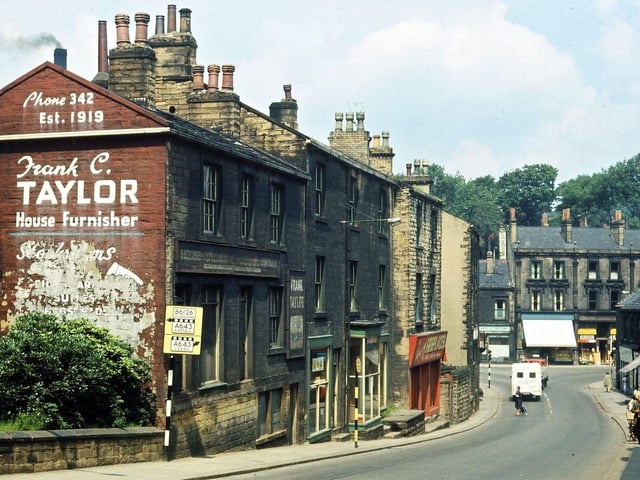
Looking down the last part of Scatcherd Hill into Morley Bottoms in July 1965 only four months before the buildings on the left hand side were demolished. These were a mixed jumble going back onto Dawson Hill, and over the door that Lawsons had as pawnbrokers was the date 1848. Obscured from the road behind these blocks was a good example of a rag warehouse with living quarters, later changed into a Chinese then Indian restaurant. Some of the furniture sold by Stanley Trousdale across the road was stored in the old buildings; some stored fireplaces and there was an old boot and shoe repairers. Photo: David Atkinson Archive
4. Morley in 1965
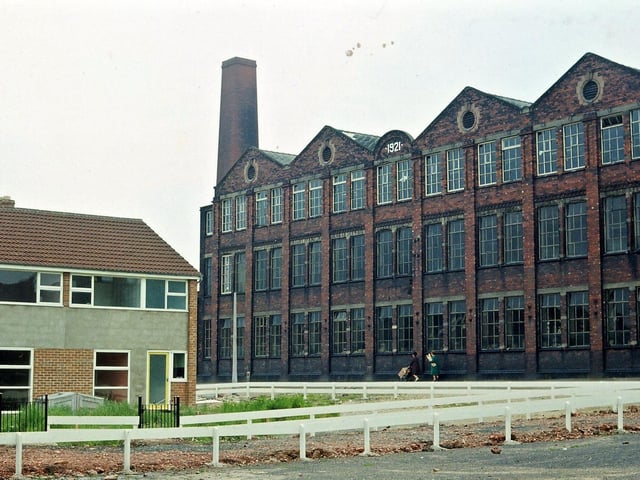
Park Mills in July 1965. The date on the front of this mill building shows that it was built in 1921, making it the last completely new mill to be built in Morley. It was built by L. Johnson, who chose an unfortunate time to launch his project by opening right on a slump in trade after the First World War. After going out of business the mill was acquired by A. Marshall & Son of Perseverance Mills on Station Road in Morley. Park Mills is so named because it was built with the front view looking straight at Lewisham Park - opened in 1914 on land which was a gift to the town for the Coronation of King George V. The land between the mill and the park was known as the Recreation Ground (rec), a large expanse of dirt ground close to Peel Street School and the 'City' streets. Photo: David Atkinson Archive
5. Morley in 1965
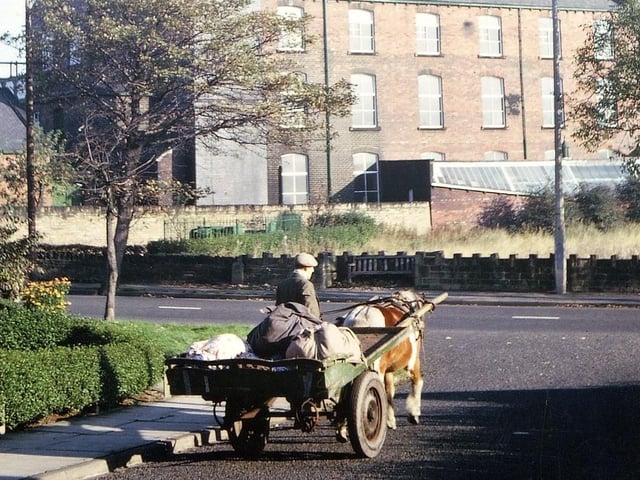
Deanfield Mills, Asquith Avenue, the textile mill of James Barker and Sons. This was a typical smaller family business, several generations of which managed the mill and served on Morley Town Council between 1886 and 1974. A smaller business in Morley would have about 100 looms and 5000 spindles on the mules. When built, the mill had almost a 'green field' site along the edge of Dean Wood, the stream here, Dean Beck, forming the border between Gildersome and Morley. In the 1950's and 1960's quite extensive areas of housing were built around the mill, the road running into Asquith Avenue here being called Deansway. Leaving Deansway, on the picture, is the cart of a 'tatter' or 'rag and bone man'. Pictured in October 1965. Photo: David Atkinson Archive
6. Morley in 1965
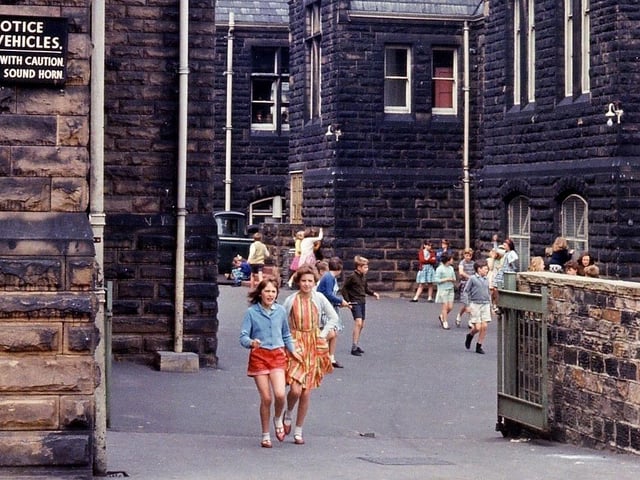
A back entrance to Peel Street Junior School on School Street in July 1965. Peel Street was Morley's first Board School and the architecture shown here is that of 1880. When first built the school had three separate sections - an infants section, a girls section and a boys section. Photo: David Atkinson Archive