
Inside Leeds Corn Exchange: The historic landmark giving independent businesses a home

From Victorian grain trading to alternative shops, Leeds Corn Exchange has always been a place of discovery
The first thing most people do when they walk into the Grade I listed building is look up.
Beneath its magnificent domed roof, Leeds Corn Exchange offers a striking reminder of the city’s Victorian past. But while its architecture has stood the test of time, what happens inside has changed considerably.
Today, the landmark is home to more than 40 independent businesses, from alternative fashion and crystals to handcrafted homeware and contemporary art. For the people who work there, however, it is much more than a place to shop. It is a community, a piece of Leeds history and a space where independent businesses can thrive.
Built in the 1860s by architect Cuthbert Brodrick, who also designed Leeds Town Hall, the Corn Exchange was originally a meeting place for merchants buying and selling grain. Its design reflected the city’s growing commercial ambitions, with the building becoming an important part of Leeds’ trading history.
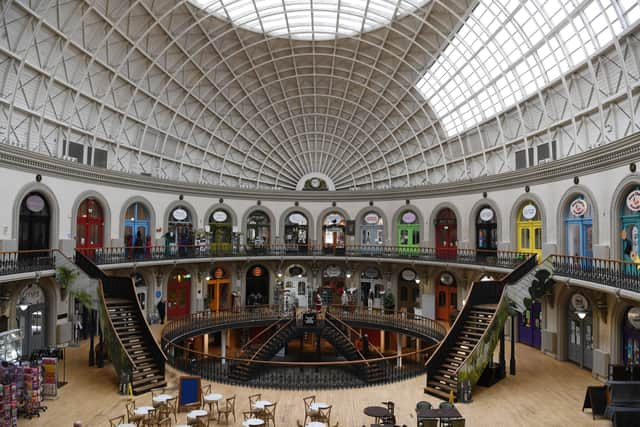

Over the decades, its purpose has evolved, including a spell as a shopping centre, while its distinctive architecture has remained largely intact.
Alice Simpson, portfolio manager at Rushbond PLC, which acquired the building in 2017, told the Yorkshire Evening Post: “It is a beautiful building and the architecture is amazing.
“Every time you see someone walk in, the first thing they’ll do is look up and take a photo. There just isn’t anything like it in Leeds..”
Rushbond has invested in repairs and renovations while working to preserve the building’s historic character. Its listed status means changes must be carefully considered, with original features protected.
But while conservation is central to its future, the Corn Exchange has never stood still.
For Anna Clark, owner of Quartz n All, opening her first shop inside the building was a long-held ambition.
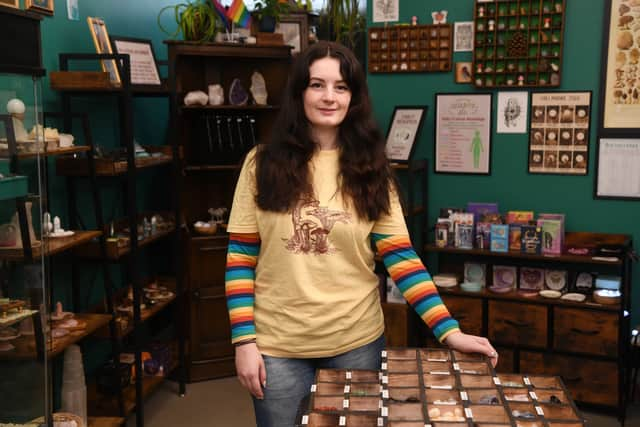
She told the YEP: “It’s amazing to have a shop in Leeds Corn Exchange. It was actually my dream location.”
Her business, which sells crystals, incense and tarot-related products, has attracted customers who remember the Corn Exchange’s alternative heyday.
She said: “I’ve had a really good response for my type of shop opening up here because of its history with goth and alternative culture.
“I’ve had a lot of people who used to shop here come back, and be really pleased and grateful that some of that culture has come back into the Corn Exchange.
“It’s become a great place for a lot of those people to come together and find a community again.”
That sense of community is echoed by Jack Bowers, designer and illustrator at Fabulous Planning, which has been based in the building for two years, and Bianca Cross, the shop’s manager.
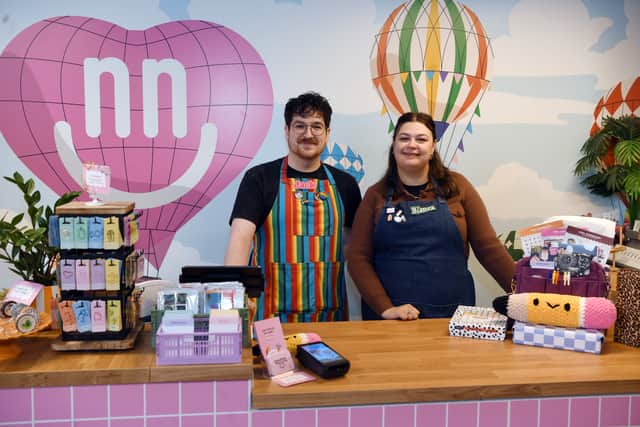
Bianca said she still feels the same excitement walking into work as she did when she first arrived.
She said: “I have a big smile on my face every time I walk into the building because it is just so beautiful.
“Even though I’m here every day, I love staring at the dome and all the independent businesses. Where else can you get a huge hub of independent businesses?”
She believes visitors can discover something different with every visit, while the building’s history continues to reveal unexpected details.
“People don’t realise how much layered history there is here,” she said, pointing to stories of the different uses of the space, including its past as a venue for nightlife.
That ability to bring together different generations, interests and businesses is what makes the Corn Exchange stand out, according to those who work there.
Liz O’Brien, who has worked at the Great Yorkshire Shop for five years, believes its independent offering gives Leeds an identity that other cities can struggle to maintain.
“The Corn Exchange makes our city more individual,” she said.
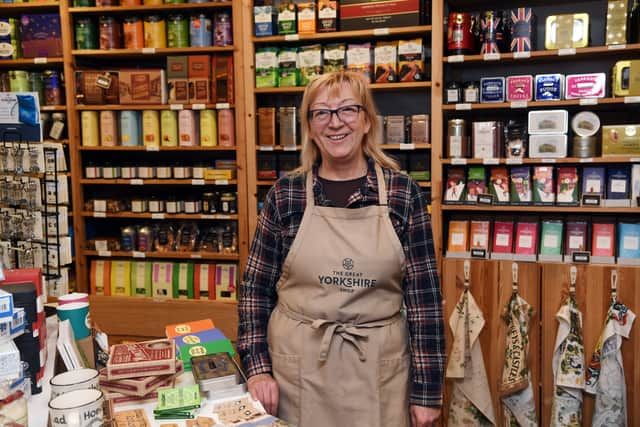
“You go to a lot of shops in high streets in other cities and it’s the same stalls. There’s nothing different to see, so it really makes us stand out.”
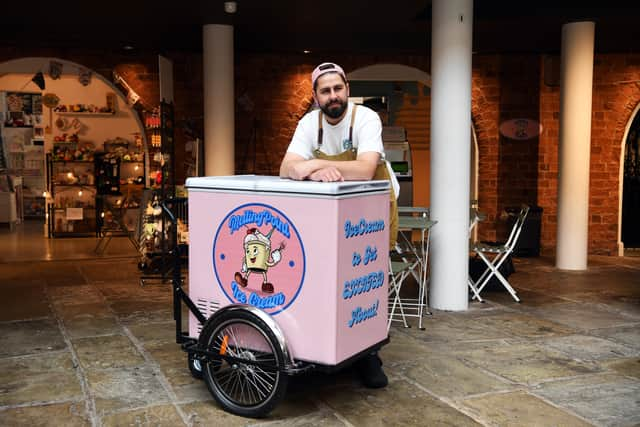
For Johno Storey, owner of Melting Point, supporting independent retailers has become particularly important in a challenging economic climate.
Melting point is an ice cream business that boasts wild flavours, including goat’s cheese and ginger, malted milk, and lapsang souchong.
“People always say that Covid had a big effect on local tourism, but I also think there’s a lot of community now, more so than ever,” he said.
“A lot of things are really difficult now in the country, and everyone’s kind of wanting to support local independent businesses more than ever.”
That independent spirit is central to Rushbond’s vision for the building. Alongside its shops, the Corn Exchange hosts markets, cultural events and artists’ commissions throughout the year, with additional space downstairs offering visitors more to discover.
Its appeal has also reached beyond the city, featuring in Susan Calman’s television programme Great British Cities and providing the setting for Chancellor Rachel Reeves to launch the Small Business Saturday initiative.
In 2025, the destination welcomed just shy of 700,000 visitors, underlining its role in Leeds’ wider retail and leisure scene.
Yet, for the people who work within its historic walls, its success is not simply measured in visitor numbers.
It is in the shop owners building businesses, the returning customers rediscovering an old favourite and the visitors who come through the doors and find something unexpected.
More than 160 years after it was built to bring grain merchants together, Leeds Corn Exchange continues to fulfil a similar purpose in a very different way: connecting people through trade, creativity and a shared sense of place.
Its future may look different from its past, but its role as a meeting point for Leeds remains firmly intact.