
Leeds West Indian Carnival 2026: Leeds comes alive as thousands turn out for spectacular 59th celebration

It’s one of the biggest events in Leeds’ cultural calendar
Leeds has come alive with the sights, sounds and flavours of the Caribbean, as thousands of people gather for the 59th Leeds West Indian Carnival.
The annual Bank Holiday celebration has returned to Chapeltown, with the colourful parade setting off from Potternewton Park on at 2pm on Monday before winding its way through the streets.
Feathers, sequins and spectacular costumes transformed the streets as carnival troupes danced to the infectious sounds of steel pans, reggae, soca and calypso.
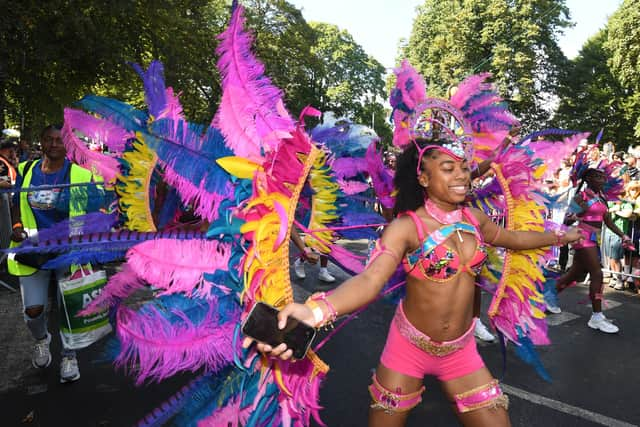

The parade followed its familiar route along Harehills Avenue, Spencer Place, Roundhay Road, Barrack Road and Chapeltown Road, with the troupes completing two laps before returning to Potternewton Park for performances.
But the celebrations had already kicked off before the main event, with the Black Music Festival bringing live performances to Potternewton Park on Sunday.
The event featured live performances spanning reggae, dancehall, rap, grime and R&B, along with food stalls, family-friendly activities and cultural showcases.
And the sunrise parade, named J'Ouvert Morning (Pre-Jam), kicked off Monday’s celebrations with an explosion of colour and joyful crowds.
It’s a tradition that sees revellers gather to cover each other in paint, mud, powder and cocoa - an early morning kickoff of the carnival.

The Leeds West Indian Carnival was founded in 1967 by Arthur France, who had arrived in Leeds from Nevis, alongside fellow pioneers including Ian Charles and Gertrude Paul.
At the first event, around 1,000 people watched a procession from Potternewton Park to Leeds Town Hall, where a steel band competition and dance brought the celebrations to a close.
More than seven decades later, that same spark lives on in Chapeltown.
Earlier this year, Arthur spoke to the Yorkshire Evening Post about founding the event with determination and improvisation. When he first suggested it, the idea was dismissed outright.
But when Carnival day arrived, the turnout stunned them.
He told us: “It shocked the whole of Chapeltown. People came from all over. It was the first of its kind in Europe.”
In 2026, the event remains one of a vibrant celebration of the city's Caribbean community and the contribution the people in it have brought to the city.
And next year, Leeds Carnival will reach a remarkable milestone – its 60th anniversary – with the city preparing to celebrate six decades of culture and community.