
‘Lord, forgive me!’: Rare Bram Stoker letters & medieval revenants star in new University of Leeds exhibition

A major new exhibition exploring the bloody trail of the vampire is set to open at the University of Leeds, including medieval Yorkshire revenants and Byron's manuscripts to Bram Stoker's personal correspondence
A new exhibition tracking the history, folklore, and cultural obsessions surrounding the vampire is set to open at the University of Leeds.
Titled Quite Shameless: Cultural Reflections on the Vampire, the exhibition opens on October 27 at the Treasures of the Brotherton Gallery.
Drawing on 14 subject collections, the display brings together manuscripts, rare first editions, Gothic literature, and archaeological finds to chart the immortal monster's evolution.
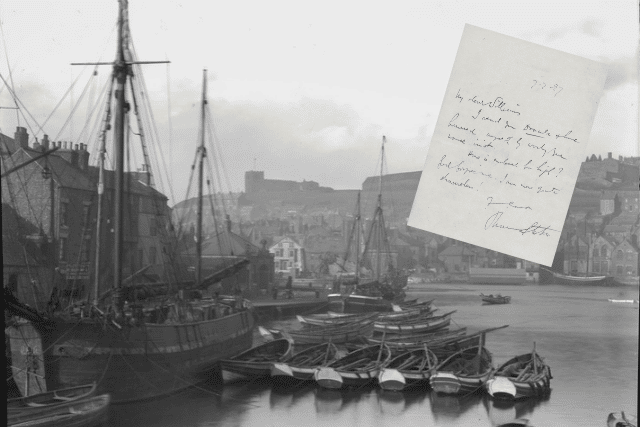

The exhibition takes its name from a letter Bram Stoker wrote after Dracula's publication, in which he joked: “Lord forgive me, I am now quite shameless!”
Alongside Stoker’s notes, animal skulls from the University’s School of Dentistry Museum, Victorian pocket watches, railway timetables, and wax phonograph cylinders reveal the Victorian technology and inspirations folded into the famous novel.
Volunteer researchers have also uncovered 17 letters sent to Stoker by friends, including former Prime Minister W. E. Gladstone and the wife of the Bishop of Ripon, who called Dracula a "painfully, hideously true" allegory.
The exhibition also features Lord Byron’s original manuscript for Fragment of a Novel, written during the legendary 1816 ghost story contest at Lake Geneva that also birthed Mary Shelley’s Frankenstein and John Polidori’s The Vampyre.
Closer to home, Quite Shameless reveals that fears of the returning dead haunted Yorkshire long before Stoker sent Dracula to Whitby.
Medieval manuscripts, Byland Abbey revenant stories transcribed by M.R. James, and gruesome archaeological finds from Wharram Percy show evidence of centuries-old local fears of the walking dead.
The vampire’s leap into performance arts is tracked through 1927 playbills from Leeds Grand Theatre and costume designs from Northern Ballet's 1996 staging.
Meanwhile, decadent-era works like Sheridan Le Fanu’s 1872 female vampire story Carmilla and 1980s activist materials from Feminist Archive North highlight how the vampire figure has repeatedly been used to explore health, social anxiety, and forbidden desire.
“The vampire is unlike other monsters: it frightens and fascinates us,” says Literary Archivist and co-curator Sarah Prescott.
“As we’ve worked on Quite Shameless, we’ve discovered just how long stories of the returning dead have captured imaginations, and how the figure of the vampire has been used to reflect society’s fears, anxieties and hidden desires.”
Quite Shameless: Cultural Reflections on the Vampire runs in the Treasures of the Brotherton Gallery at the Parkinson Building, University of Leeds, from October 27 to May 29, 2027 (open Tuesday to Saturday, 10am–5pm; admission is free with no booking required), with a public opening event on October 27, from 5.30pm.