
2-point drop goals and 6 subs confirmed among rugby league's 14 law changes for 2027
Two-point drop goals and a six-man bench are among law changes being introduced by the RFL for next season.
The governing body today (Thursday) announced a list of 14 amendments and interpretations for the 2027 season, which they say are “designed to enhance the on-field product, reduce stoppages and increase ball-in-play time”. They will also bring the British game into line with the southern hemisphere NRL.
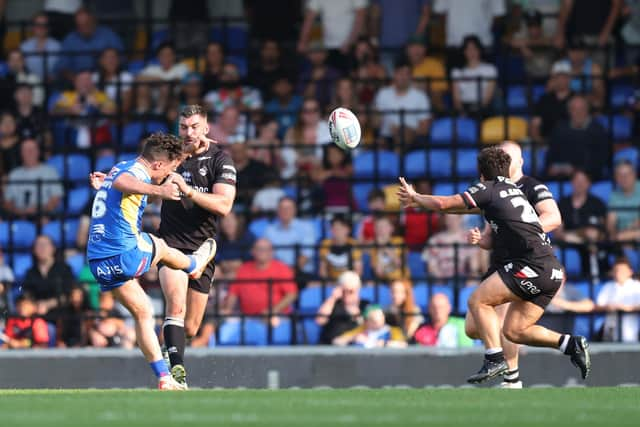
Most notably, drop goals kicked from outside the opposition’s 40-metre area will double in value, to two points. That will apply to all RFL competitions.
For men’s Super League only, matchday squads increase by two to 23 and clubs will be able to name six substitutes, with up four being used during a game. That law - along with two-point drop goals - was used at the recent World Cup and is in force in the NRL.

Rather than naming 21 players at noon two days before a match, clubs will submit their 23 by 4pm on Tuesday and squads will be announced that evening. Players will be named in position order, from one to 13, followed by substitutes numbered 14 to 19.
The RFL say there will be “limited exceptions for changes relating to Sunday matches, injury and disciplinary matters.” Players may be named in both a Super League and a Championship squad on the same weekend. The number of interchanges will remain at eight, with an additional two available in golden point.
The full list of amendments is:
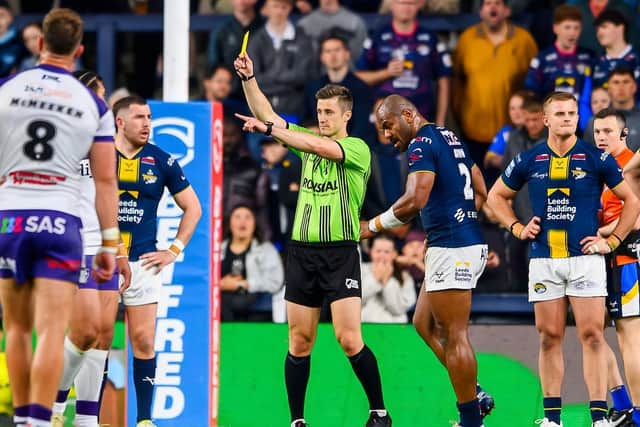
Ball steal: A marker who steals the ball by playing at the hand or arm of the ball-carrier without making a genuine attempt to tackle will be penalised. This applies to both markers, who retain that status until the following play.
A defender will be permitted to steal the ball when only one defender is affecting the tackle, including when a second defender has dropped off. A defender may also steal the ball in a tackle involving more than one tackler if the attacking player is attempting to ground it for a try.
Contested catch: When two or more players genuinely attempt to catch a ball from a kick, there will be no handling offence provided one of them catches it without the ball touching a different player or the ground. Play will continue without a knock-on being awarded against either player or the tackle count being reset to one or zero. Players must make a genuine attempt to catch the ball - obstruction and foul play will still be penalised.
Scoring points: Two points will be awarded for a drop goal kicked from outside the opponents’ 40-metre line. A try will be awarded if the ball rotates from the hand to the wrist or forearm, provided there is no obvious separation between the ball and the hand or arm.
Double movement will only be considered when the ball-carrying arm is promoted further after it has hit the ground. A ‘paddling’ motion with the non-ball-carrying arm will not be grounds for a double movement penalty. Players who drive a team-mate forward to score a try will be penalised.
20-metre restart: A seven-tackle set will follow when the ball is kicked dead or defused in-goal. An accidental breach in the in-goal area will result in a six-tackle set. A quick 20-metre restart will be permitted unless the ball has been returned to the 20-metre line by a pass of more than 10 metres.
When a defender delays a 20-metre restart, use of the sin-bin will be at the referee’s discretion, with the option of awarding a penalty at the centre of the 20-metre line.
Contested kick-off: If a kick-off goes out on the full or fails to travel ten metres forwards, play will restart with a play-the-ball rather than a penalty.
Play-the-ball: A player who accidentally plays the ball incorrectly, or loses possession while attempting to play it, will be asked to replay it under a controlled play-the-ball. This will not apply if the incorrect play-the-ball is deemed deliberate or is a persistent breach.
Downtown players: Players on a kick chase will be penalised if they advance beyond the point of the last play-the-ball before the ball has passed them.
Set restarts – six again: Set restarts will be awarded for offences against the ball carrier in the ruck area outside the 20-metre line of the team in possession. This will also apply to 10-metre offside offences outside the 20-metre line of the team in possession.
Penalties and quick restarts: Quick restarts will be permitted following penalty infringements, with six exceptions: A ten-metre penalty; penalty within ten metres of the goal line; penalty arising from kicks in general play; when the referee is taking further action; when the mark has been advanced; when the penalty results in a change of possession.
Video referee and captain's challenge: The video referee will be able to report foul play to the referee up to the first play-the-ball of the next set. All 20-metre restarts and goal-line drop-outs will be checked by the video referee without the on-field referee having to request a check.
No additional captain’s challenge will be awarded in golden point. A challenge will only be permitted if the referee’s final decision before the challenge is one that can be challenged. The threshold for penalising foul play will be whether the on-field referee would have penalised the incident had they seen it.
Amendments are for Men's Super League only:
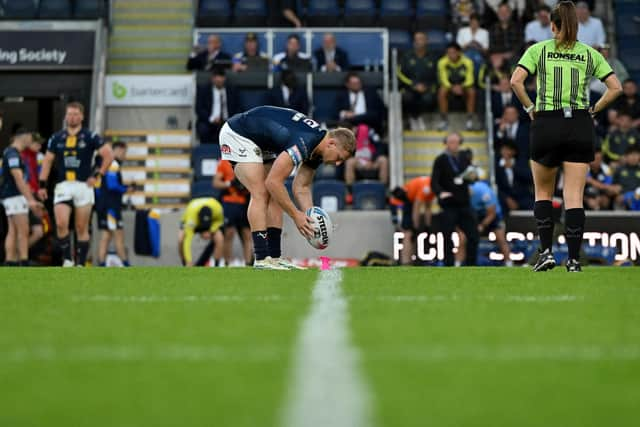
Shot Clock: The shot clock will be set at 25 seconds for a goal-line drop-out and 30 seconds for a scrum. The goal-kick shot clock will remain as in 2026: 60 seconds from ‘try confirmed’.
Green Card: The 2026 Green Card policy will continue, with an additional provision for stoppages involving blood. When play is stopped for blood, the trainer or physiotherapist will be asked to treat the player behind play or off the field. If the player has not been moved or interchanged after a reasonable amount of time, the Green Card protocol will apply.
Matchday squad and interchange: The matchday squad will increase to 23 players. All clubs will be required to submit their squads by 4pm on Tuesday, with a centrally controlled announcement that evening.
Players will be named in position order, from one to 13, followed by substitutes numbered 14 to 19. Players may be named in both a Super League and a Championship squad on the same weekend.
The game squad will comprise 19 players, with six players on the bench and four available to play. Additional players may be activated under the existing head injury assessment (HIA) protocols, which are unchanged. The number of interchanges will remain at eight, with an additional two available in golden point.
Matchday squad announcements: There will be limited exceptions for changes relating to Sunday matches, injury and disciplinary matters.