
Leeds then and today: The fascinating history and transformation of the White Cloth Hall on Kirkgate

It's the city centre landmark whose history dates back more than three centuries.
The White Cloth Hall on Kirkgate was constructed in 1711 was the first of four halls built over the last 300 years for the sale of undyed cloth.
The hall represented the beginnings of the city’s wealth, through its successful cloth trade. It was originally built to dissuade traders from moving away to a new covered cloth hall in Wakefield.
Yet by 2010 the Grade II listed building had fallen into a state of disrepair, leading to its partial demolition. However, all hope was not lost for this city centre landmark.
Thanks to years of campaigning for its preservation and renovation, restoration works began in 2019 after it Leeds City Council granted Rushbond Group permission to save the structure.
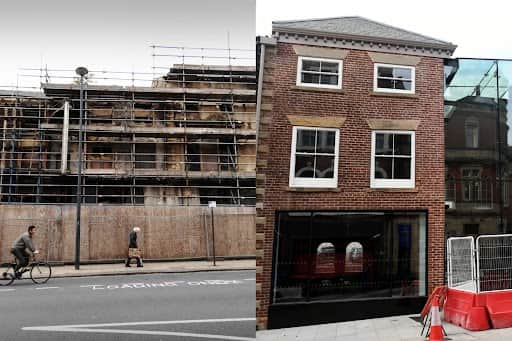

The restoration now includes a complete reinstatement of the original West Wing, which was lost during demolition in 2010.
There is also a top-lit atrium in place of the former central courtyard, and a new circulation core on the building’s southern elevation to create a visual link to the city centre's Crown Square and Corn Exchange.
Your YEP visited the site and produced this video report on its rich history and modern day evolution.