


Leeds is a city that never stands still, and these fascinating pictures reveal how dramatically its streets have been transformed over more than half a century.
They show just some of the buildings, including several well-known landmarks, to have been demolished over the years.
Those buildings are either pictured between 1950 and 1999 or were demolished between these dates. Most are shown still standing, but others are seen already being reduced to rubble.
Some have only recently been consigned to history, while others are already a distant memory.
The lost landmarks featured in this retro photo gallery include the Imperial Hotel, which stood on Briggate for 80 years before closing its doors for good in March 1961 and being demolished.
Pictured too is Leeds Central Station, which served passengers for more than a century, between 1854 and 1967, before being razed, with a Royal Mail sorting office built in its place.
Many people will also remember the architecturally striking Leeds International Pool at Westgate, which opened in 1967 and lasted four decades before closing in 2007 and being flattened two years later.
The hulking Quarry Hill Flats also dominated Leeds’ skyline for many years. Built in the 1930s and housing 3,000 people, it was said to be the largest and most modern social housing complex in Europe at the time. The flats were demolished in 1978, with Leeds Playhouse being built on the site.
A more recent casualty of time’s shifting sands was Tetley’s brewery on Hunslet Road, pictured here in the 60s, with two of its famous shire horses ready to pull a beer-laden dray. The brewery closed in 2011, and most of the site was demolished the following year, but the iconic art deco Tetley building survived and was transformed into an art gallery.
A 60s secondary school, a famous shopping arcade, an old fire station, and two pubs demolished to make way for the Inner Ring Road are just some of the other lost buildings featured in this trip down memory lane.
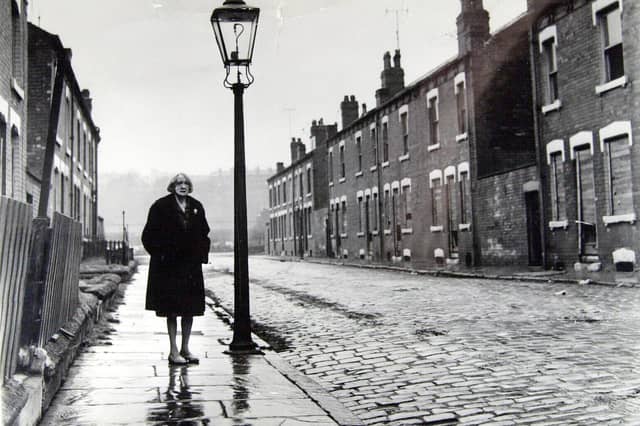
But perhaps the most striking image shows the last resident of a cobbled street standing alone amid the deserted row of houses shortly before they were demolished in the name of progress.
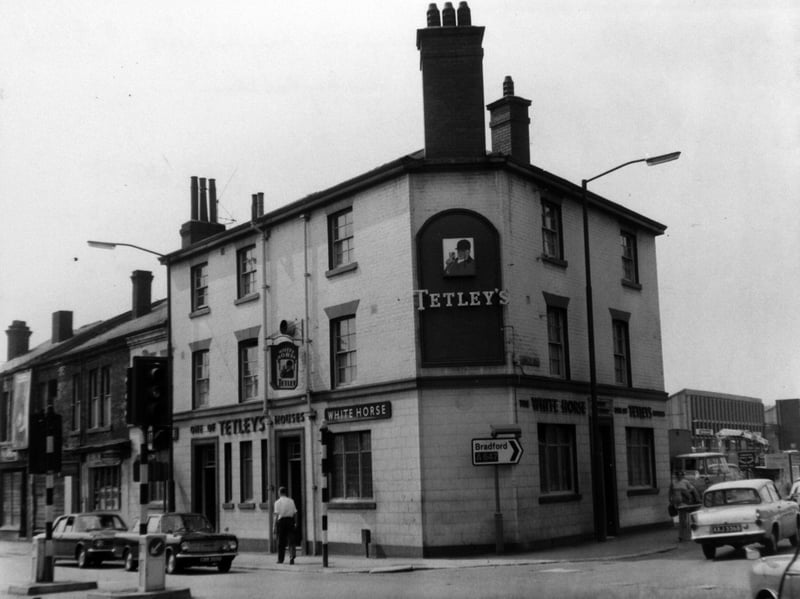
25. White Horse
The White Horse pub, at the junction of Wellington Road and Armley Road, Leeds, pictured in May 1973, before it was demolished to make way for the Inner Ring Road scheme | YPN
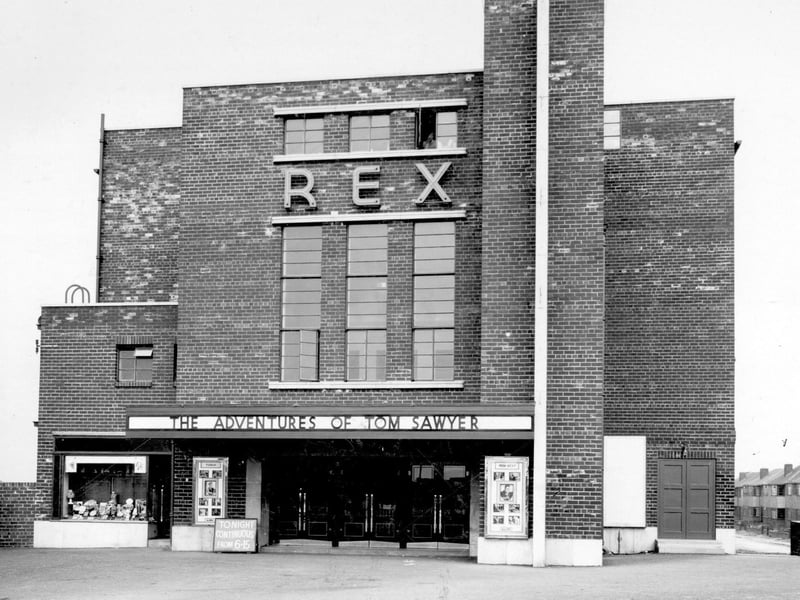
26. Rex Cinema
Rex Cinema, on the Ring Road, in Beeston, Leeds, was designed by AV Montague and built by Mathews and Sons of Leeds. There was seating for 1,350 people. It opened on February 13, 1939, with the screening of 'We're Going to be Rich' starring Gracie Fields and Victor McLaglan. It closed in February 1976, with the last films screened there being 'Apple Dumpling Gang' and 'Sword in the Stone'. The cinema was demolished to make way for a housing estate.
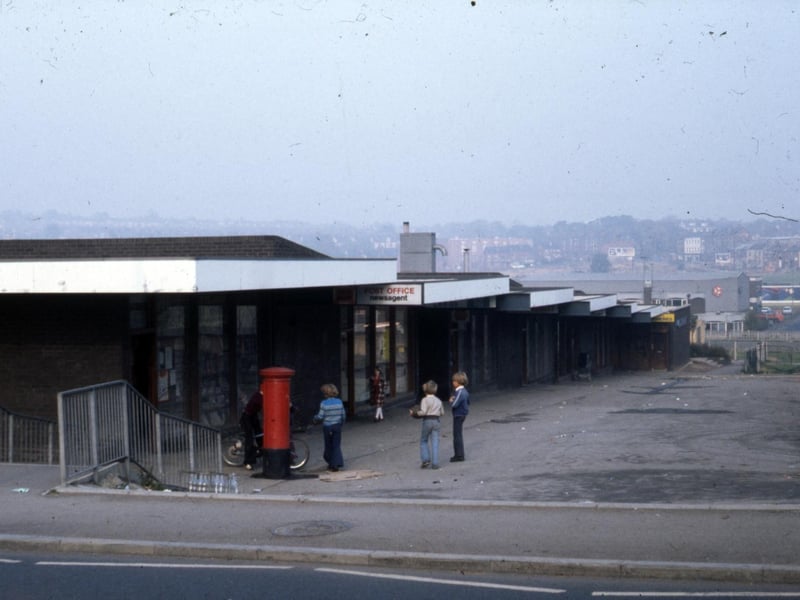
27. Meanwood Street shops
A parade of shops on Meanwood Street, off Oatland Lane, Leeds, including a post office and newsagents with a postbox outside. The shops have since been demolished.
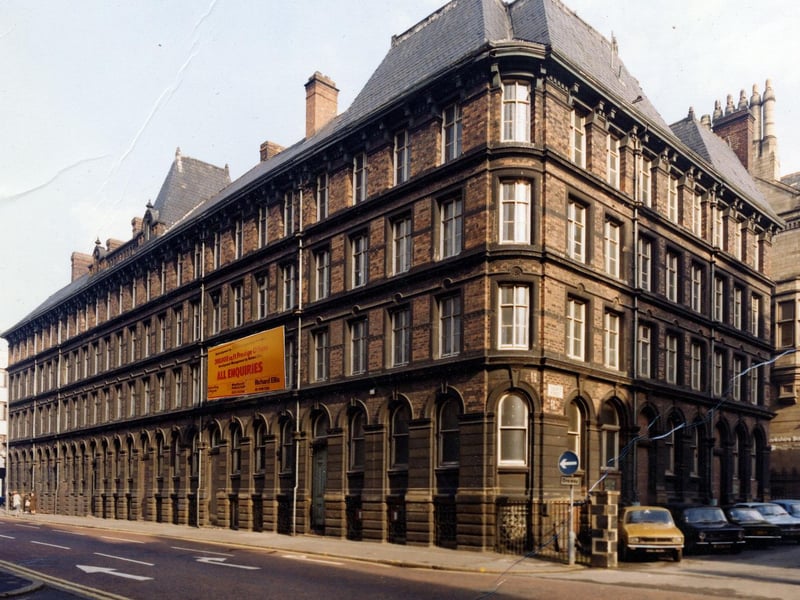
28. Quebec Street
Quebec Street, Leeds, showing the junction with Toronto Street, right. Quebec Street opened in 1872 and was named in memory of General Wolfe, who captured Quebec, in Canada, in 1759, but was killed in the Battle of the Plains of Abraham. This photograph dates from 1979, when office space was being advertised with a large 'all enquiries' sign. Towards the end of the 19th century, the corner buildings at the junction of Toronto Street and Quebec Street were occupied by the firm of G.H. Roberts & Co., manufacturer and merchants of textiles. It is addressed in the Slater's Directory of Leeds and District for 1890 as number 10 Toronto Street. George Herbert Roberts also had premises at Beeston Hill and St. Lukes Road in Beeston. The partnership he had with his brother Edwin Roberts was dissolved in 1892. These buildings have been demolished and were replaced by Cloth Hall Court between 1980 and 1983.
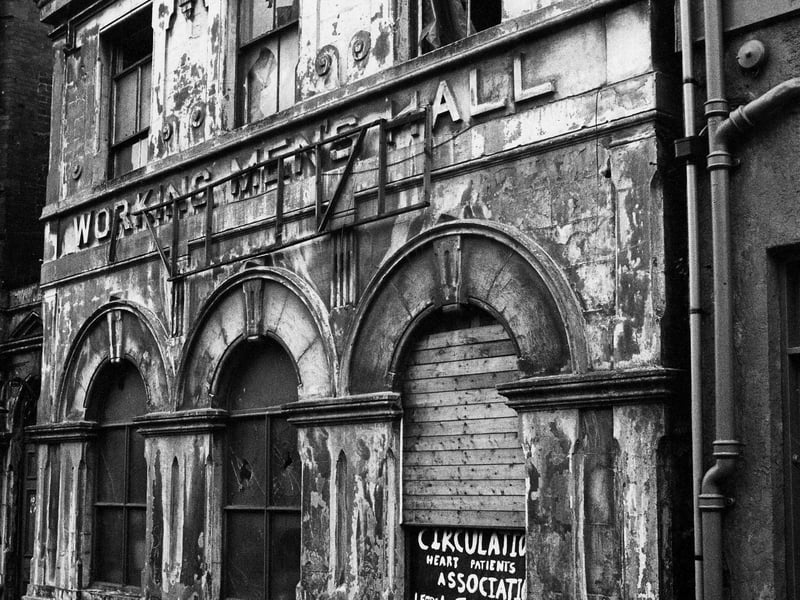
29. Working Men's Hall
Working Men's Hall, on Park Street, Leeds city centre, in 1981. This building was demolished in 1987, with the site to be part of the new magistrates' courts. The Leeds Working Men's Institute had begun in 1861, with this hall opening in 1867. The facilities provided for working men included a library and newsroom, which took daily papers and magazines, games such as chess, and a washroom with hot water, soap and towels. It cost 1p per week for use.
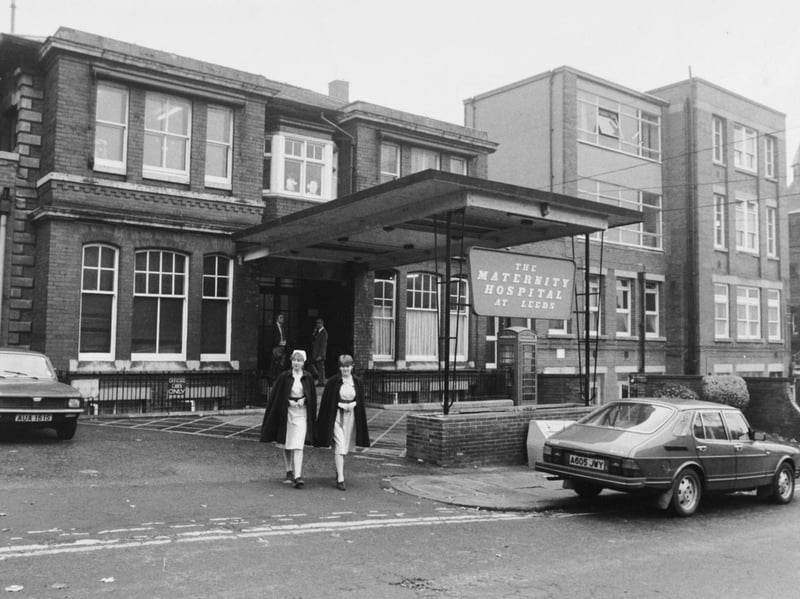
30. Leeds Maternity Hospital
Leeds Maternity Hospital, on Hyde Terrace, pictured in November 1983. It closed that year, and the building was demolished in 2001.