
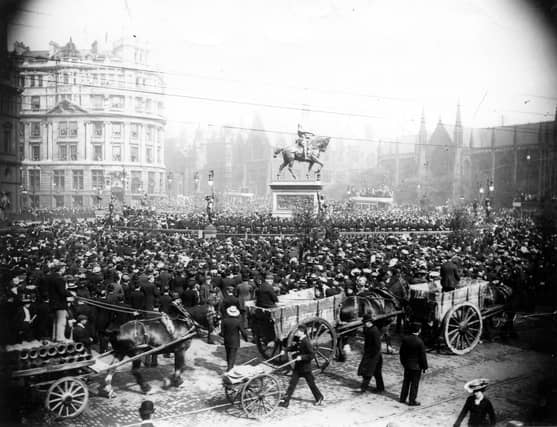


Thousands turned out in City Square to catch a glimpse of the Black Prince statue which still points the way to this day. This was 1903 and the photo is one of 19 showcasing a year in the life of the city. Suburbs in focus include Little London, Osmondthorpe, Rodley, Sheepscar and Beeston. The images are published courtesy of photographic archive Leodis, which is run by Leeds Library & Information Service. They also run heritage blog The Secret Library Leeds, which provides a behind the scenes look at the Central Library and highlights from its special collections, including rare books hidden away in the stacks. READ MORE: Black Prince - Memories of the Leeds landmark which points the way LOVE LEEDS? LOVE NOSTALGIA? Join Leeds Retro on facebook YEP RETRO NEWSLETTER: Sign up for our free monthly email digest of Leeds nostalgia
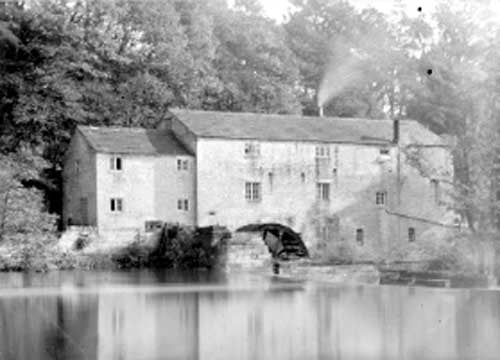
19. Thorp Arch
Flint Mill, located about one and a quarter miles upstream of Thorp Arch Bridge near the western boundary with Wetherby. It began as a water powered corn mill around 1772 but when the sails of a Leeds windmill collapsed and were irreparably damaged in 1774 the mill began to grind flint for Leeds Pottery owned by Hartley Green and Company. Thorp Arch was a good location for this industry as the flint was transported by sea from the south coast and upstream from the Humber Estuary via the Rivers Ouse and Wharfe as far as Tadcaster. | Leeds Libraries, www.leodis.net Photo: Leeds Libraries, www.leodis.net