
Leeds council sets out homelessness action plan to prevent and tackle rough sleeping

‘No one should have to sleep rough to receive the support they need’
Leeds City Council has set out an action plan for how it will tackle rough sleeping and improve support for the homeless.
The partnership-led plans will be presented to the council’s executive board on November 18, setting out how the city will support the Government’s ambition to make homelessness “rare, brief and non-recurring”.
The plans will build on Leeds’s existing Homelessness and Rough Sleeping Strategy 2023-2028, with a greater focus on identifying people at risk earlier and preventing them from losing their homes.
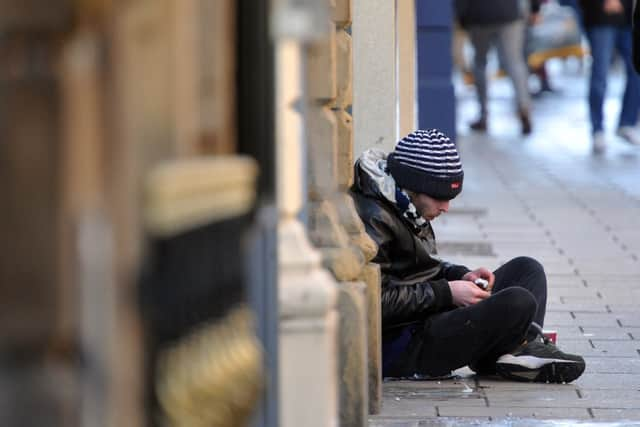

Last month, the council announced it had agreed to allocate £1.64m from the Ministry of Housing, Communities and Local Government as part of the Government's three-year Rough Sleeping Programme.
The council aims to offer safe accommodation to Leeds’ rough sleepers by Christmas, but the scheme had come under fire by a homeless charity, who called for better wraparound support.
Council leaders say Leeds has consistently performed above the national average for successful homelessness prevention, helping hundreds of households remain in their homes or secure alternative accommodation.
But demand for housing support remains high, with more households seeking help in Leeds than in comparable cities.
The council announced in September that its housing growth programme had delivered more than 1,000 energy-efficient and affordable homes for people on Leeds’s housing register.
And it says the new action plans will respond to the changing housing market and increasing pressures on services, with a focus on bringing public services together to prevent homelessness.
This will include clearer responsibilities for agencies, earlier intervention when someone's housing is at risk and a more coordinated response when homelessness occurs.
A separate long-term rough sleeping partnership plan will aim to move away from responding to people once they are already sleeping on the streets.
Instead, services will focus on identifying people earlier, engaging with them and providing integrated support to help them move into accommodation and maintain their tenancies.
The plans will be introduced alongside the Government's national Rough Sleeping Programme, which has provided Leeds with £1.6m in funding.
The first phase will provide 39 additional accommodation spaces and expand outreach services, housing support and specialist help for women.
It will also increase access to drug and alcohol treatment, general healthcare, intensive intervention and support to help people maintain their tenancies.
Councillor Mary Harland, Leeds City Council's deputy leader and executive member for communities and community safety, and Councillor Asghar Khan, executive member for housing and hubs, said the authority had made prevention a central part of its approach since publishing its five-year strategy in 2023.
They said this had included identifying people at risk earlier, providing housing advice and financial assistance, helping people sustain their tenancies and working with landlords to increase rehousing opportunities.
They added: "This activity has provided strong results, but we know that there is more to be done as demand increases and the context that we are working in changes.
"The existing strategy has been reviewed against the national plan and remains strongly aligned in ambition and principles.
“Our new action plans will build on that foundation, responding to changing pressures and strengthening delivery where needed."
The councillors said earlier intervention and stronger partnership working would help reduce the need for crisis responses and improve outcomes for residents at risk of homelessness.
Councillor Emma Flint, Leeds City Council's executive member for equality, adults and health, said: “We recognise that homelessness is not just a housing issue, it is also a significant health inequality.
“Sustainable reductions in numbers require a variety of services, including healthcare, mental health, and drugs and alcohol services, to work together to provide support, particularly to those with multiple and complex needs.
“A big focus will be on embedding trauma-informed working within all services. No one should have to sleep rough to receive the support they need.”