
'Being 6'3" and gay, I thought no one would believe me': Leeds domestic abuse advocate urges men to seek help

‘There’s support out there, and people will believe you’
When Darryl Matthews pressed “post” on a short LinkedIn message during Mental Health Awareness Week (May 11-17), he expected a handful of supportive comments from colleagues.
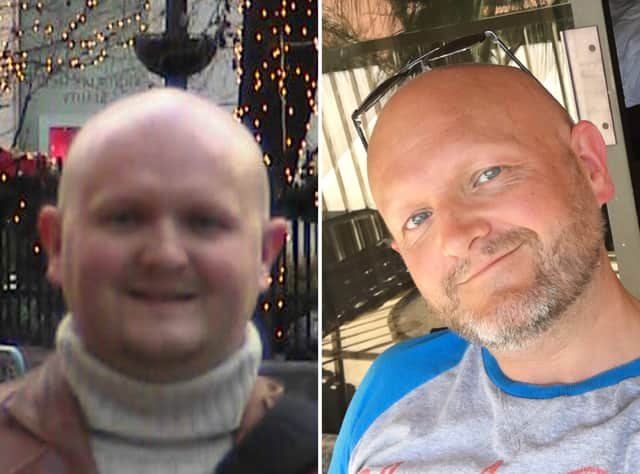
Instead, his story - paired with a striking before-and-after photo showing him at his heaviest during the lowest point of his life - reached more than 114,000 people in a matter of days.


“I was eight stone heavier than I am now,” he told the Yorkshire Evening Post when we met at a café in the city centre. “I was at a very, very low point. People saw the picture and thought, ‘What’s that all about?’ Then they started reading.”
The response has been overwhelming, but for Darryl, who lives in Leeds, it has confirmed something he has long suspected: men’s experiences of domestic abuse remain largely unseen.
‘People still picture domestic abuse as physical’
Darryl said he experienced a relationship marked by coercive control, emotional manipulation and, later, physical and financial abuse. For most of that time, he told no one. Not his family. Not his colleagues. Only one friend knew anything at all.
“I put on a brave face,” he said. “Being a man, being six-foot-three, being gay - it all fed into this idea that no one would believe me.”
After several years, he said he reached a breaking point: “I looked at myself - 22 and a half stone, unwell, no one to talk to - and I thought, ‘I need to turn this around once and for all.’”
Darryl is clear that domestic abuse takes many forms - and that society still struggles to recognise the less visible ones.
“People hear ‘domestic abuse’ and think hit, smack, punch,” he said. “But there is financial control, psychological manipulation, being ignored for days or weeks. Years of that takes its toll.”
He points to national statistics showing that men make up around 41 per cent of domestic abuse victims - a figure he admits even he didn’t realise until recently. According to the ONS, around 1.5 million (6.5%) men in the UK said they were victims of domestic abuse in 2024/25 - more than the total number of male residents in West Yorkshire.
Darryl added: “People tend to assume it’s only women. And women absolutely need support - the numbers are huge - but men are out there going through this too, and many won’t speak up.”
Taking survivor-led conversations into workplaces
Last year, Darryl started speaking publicly about his experience. What started as a single talk for his employer has grown into invitations from national conferences, major corporations and charities.
He has now launched Mind Games Media, a platform aimed at helping organisations create “conversations people remember” about domestic abuse - particularly the hidden forms.
“The workplace is where people spend most of their time,” he said. “I carried everything into work and nobody knew. Employers are doing more now, but sometimes they don’t publicise the support they already have - like confidential counselling or health insurance that covers therapy.”
He stresses that he doesn’t go in to shock people, but to make the reality visible.
“When you tell the story alongside the cycle of abuse, the penny drops,” Darryl said.
“People start thinking differently about their colleagues - noticing when someone hasn’t been themselves.”
‘You’re not alone’
Darryl now receives messages from men across the UK who recognise their own experiences in his story. Some are still in abusive situations, while others have never told a soul.
“It’s heartbreaking, because it takes me back,” he said. “All I can do is signpost people to the right charities and remind them they’re not alone.”
His message to anyone in Leeds quietly living through abuse is simple: reach out - to a friend, a colleague, a charity, anyone you can trust.
“Just hearing ‘Are you okay?’ can mean everything,” he said. “Silence can cost lives. There’s support out there, and people will believe you.”
Looking forward
Today, Darryl is married and rebuilding his life with a sense of purpose he never expected. Speaking out, he says, has been cathartic - not because he wants to relive the past, but because he hopes his story might help someone escape theirs.
“If one person reads this and thinks, ‘I need help’, then that’s a win,” he said.
If you have been affected by anything in this story, support is available through the ManKind Initiative, a confidential helpline for male victims of domestic abuse. Visit https://mankind.org.uk/ or call 0808 800 1170 (freephone) or 01823 334244 (helpline).