
Wakefield: Police make arrests after fake Scottish banknotes used in shops as warning issued to retailers

Cops in Wakefield have made a number of arrests after fake Scottish banknotes were used in shops across the region.
The counterfeit cash is believed to have been used to buy goods in stores, before the items were taken to other branches to be exchanged for cash. Incidents have been reported in Wakefield, Barnsley, Sheffield and Chesterfield.
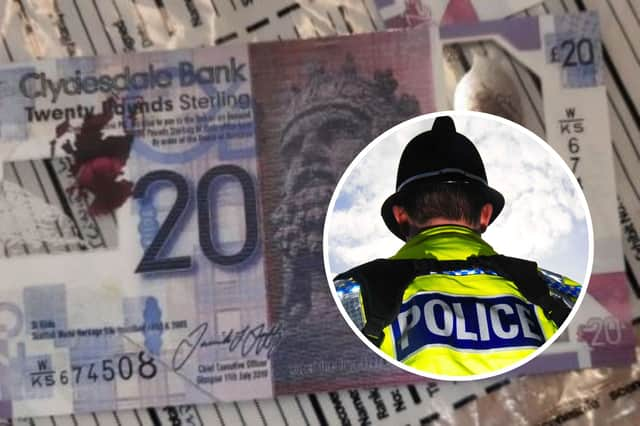

Now, police have confirmed that three men have been arrested in connection with the reports after they were stopped in a car in West Yorkshire last Tuesday (January 21).
Patrick Ward, 22, of Coole Park, Galway, Ireland, and Jason Ward, 19, of Radharc Na Freine, Galway, Ireland, were subsequently charged with conspiracy to have custody or control of a thing knowing it was a counterfeit currency note. They were remanded into custody to appear at Leeds Crown Court on February 21.
William Browne, 19, of St Finbars Terrace, Bothermore, Galway, Ireland, was also charged with the offence and released on bail to appear in court on the same date.
Police have issued a warning to retailers after the fake Clydesdale £20 notes started appearing in shops across the country.
Detective Sergeant Craig Twycross from Wakefield CID said: “We are urging retailers to be vigilant and to take the time to check notes thoroughly.
“Shop staff should familiarise themselves with the security features of genuine notes, and if in doubt compare the suspect note with a note you know to be genuine.
“Any incidents involving these notes should be reported to your local police force.”
The National Crime Agency (NCA) has provided further information to help spot counterfeit notes.
Neil Harris, Head of Unit at the National Counterfeit Currency Unit (UKNCO) at the NCA said: “Counterfeit Clydesdale £20 notes may feature what looks like a convincing hologram, but staff should also check for the colour-changing ink used in the map of Scotland in the top left corner of the note.
“If the note is genuine, the map will change colour from purple to gold when the note is tilted, and there are also moving rings across the map.
“You can also feel for the raised print that appears across the note including on the name of the bank.”
Incidents involving counterfeit notes should be reported by calling 101. Information can also be shared anonymously with independent charity Crimestoppers by calling 0800 555 111. Reports should not be made to Action Fraud, which does not deal with counterfeit currency.