
Wood Street Collection: Inside Wakefield's new city centre neighbourhood

For generations, Wood Street sat quietly behind Wakefield’s grand civic buildings – a street shaped in the early 19th century, but overshadowed in recent decades by empty offices, disused car parks and the retired police station.
Once part of a network of burgage plots, ginnels and yards running off the city’s principal thoroughfares, it has long been a quieter part of Wakefield, slightly elevated from the bustle of trade yet still firmly connected to city life.
Now, Rushbond’s housebuilding division, Fallowdale Homes, is helping to re-energise this part of the city centre with its £17.5m award-winning development, known as The Wood Street Collection.
A mix of conversion and new build homes, the scheme is transforming the old police station into 33 rental apartments, and creating nine townhouses at Gill’s Yard – now 50 per cent sold.
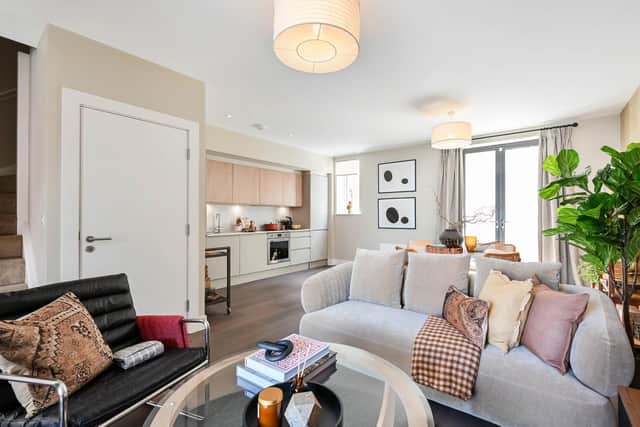

The communal gardens serving Gill’s Yard are now complete, creating a shared green space and including a greenhouse for green-fingered residents. The homes, which are on the market from £275,000, also include a private parking space, with EV charging available.
Demand for the studio and two bedroom apartments in the converted Old Police Station is gathering pace. A fifth of the 22 apartments available in the initial phase have been let off plan. The first residents are expected to move in at the start of November.
Future phases of the Wood Street Collection include Wood House, a one-off four-bedroom home located in the former superintendent’s residence, and Gill’s Mews, which will bring 12 new townhouses and eight mews homes to the market in 2026.
In addition, the 215-year-old former crown court is being converted into a multi-use arts venue to include a food hall, offices, events space and studios.
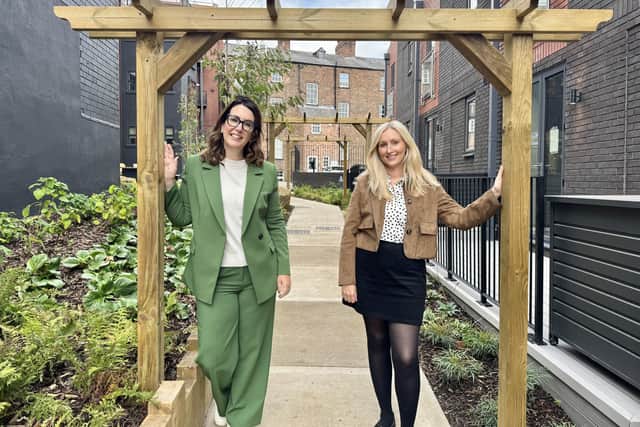
Nina Barker, residential sales manager, says bringing residents back into Wakefield city centre has always been part of Rushbond’s ambition and although the homes are primarily aimed at young creatives, they have also proved popular among downsizers and young families.
The location offers immediate access to Wakefield’s civic quarter, including the Town Hall, and the wider centre.
Nina says this is part of a growing preference. "We’ve found that these homes attract people who want less maintenance and who want the city centre location,” she says.
"As we start to populate the scheme, I think those young people might start to come through too.”

The Old Police Station began life not as a base for officers but as health offices built in 1931 for West Riding County Council, replacing the Paragon Iron Works that once operated on the site.
Wakefield’s first police force dates back to 1848, but until the 20th century they worked out of smaller premises and borrowed cells in the courthouse.
The more recent station, familiar to many in the city, closed in the 2010s and stood disused, one of several stalled plots in the area.
“It had been empty for a long time,” Alice Simpson, residential portfolio manager, says.
“You had this run of buildings in a brilliant central location, but no residential heart. The council were really clear about wanting that to change. They’ve been proactive in supporting development here.”
Some traces of past use remain in the Old Police Station. Former custody cells were removed, but their footprints defined parts of the layout.
Office corridors have become residential hallways and cosy communal lounges have been named cell one, cell two and cell three as a nod to the building’s past.
Original features have been retained where possible, including fireplaces and the pillars and archway at the entrance to the building.
Externally, the building’s brick, stone details and symmetry have been retained. “These buildings hold the character of the area,” says Alice.
“You’re opposite a courthouse from 1810 and a town hall by the same architect who worked on the Savoy Hotel. Restoring these buildings preserves a longer story.”
That story includes memories held by many in Wakefield. Layers of commercial and public life have come and gone, but the buildings remain.
“We had a heritage open day a few weeks ago and so many people were telling stories of when they used to work at the police station,” says Nina.
"They also filmed a couple of episodes of A Touch of Frost here. It’s a building that means a huge amount to people and holds so many memories for them.”
The council’s role in enabling this change has been significant. Council-owned assets have been brought to market in stages, allowing developers to progress schemes that were once stalled.
At the same time, attention is being paid to how the development fits into the existing city grain and the hard work is already paying off. The Wood Street Collection won the Best Large Residential Development award at The Yorkshires Residential Real Estate Awards earlier this month.
"I’m not sure Wakefield thought it was ready for something like this – it’s very different – but it’s been very well received,” says Nina.
For more information, visit Wood Street Collection