
'Times have changed': How hotel restaurants became a core part of Leeds' dining scene

Leeds' hotel restaurants are evolving into must-visit dining spots, showcasing unique culinary experiences
Hotel restaurants have changed significantly over the last decade. For the longest time, their main purpose was simply to give guests somewhere reliable to eat - a late-night bite after check-in or a sit-down dinner before heading out.
But in Leeds, that model has shifted. Today, hotel restaurants are increasingly treated as standalone venues, with their own concepts, chefs and identities.
For week three of the Yorkshire Evening Post’s Leeds Summer Served campaign, we look at how hotel dining has evolved and why operators say the sector is becoming more important to the city’s wider food offering.


Wayne Topley, managing director at Cedar Court Hotels and chair of the Leeds Hotels and Venues Association (LHVA), says the change has been gradual but noticeable.
“What we’ve seen in the last 10 years is those brands realised that, where public areas, food and beverage were seen as nice to do or an add-on, many of these businesses now see that there's an opportunity,” he told the Yorkshire Evening Post. “We’re now seeing the return of the phrase ‘destination dining venue’.”
He says hotels are now working harder to create restaurants that stand on their own merit: “These hotels are now working harder to create something special and unique in that space to hopefully add another reason to stay in the hotel - and it does work, and it is a different way of looking at the business.”
A shift across Leeds
The shift is visible across the city. Azotea opened at Hyatt Place Hotel, bringing a rooftop Latin American concept to Leeds. Cinnamon Kitchen arrived at The Queens, led by chef Vivek Singh. Banksia opened inside the new Indigo Hotel.
“Hotels were the masters, decades ago, at making you feel unwelcome, that you weren't able to go into a hotel,” Wayne said. “I used to stand in the front doors of The Queens on a Friday night, and people used to ask permission to come in - and that was 10 years ago.”
He says hotels began to realise that their guests were the same people dining in the city’s independents.
“It’s the same people that are staying at the Park Plaza in City Square that are going to Restaurant Bar & Grill,” he said. “So why not get yourself up to that seat?”
Built-in advantages
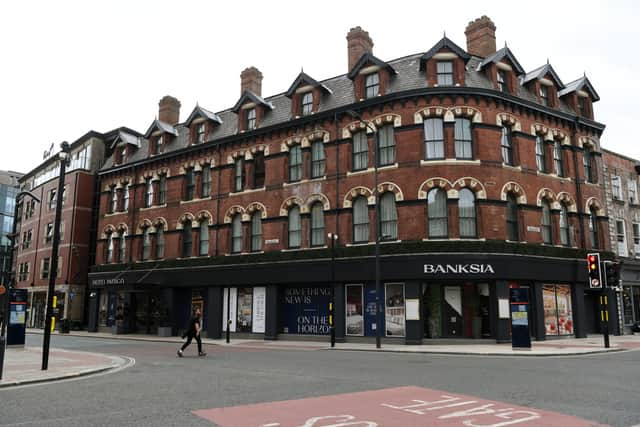
Hotel restaurants have several advantages over standalone venues. They have a ready-made audience - what the industry calls "sleeper-diner" potential - and a direct relationship with guests through booking systems and loyalty programmes.
“You’ve got a captive audience,” Wayne said. “Convenience is also a factor because there are still good potential customers who go to a new city or a new town and want a little bit of familiarity.”
Hotels also have staff on hand around the clock.
“Hotels have always got a chef available; hotels have always got a service team available,” he said.
But opening a restaurant in a crowded market comes with risk. Wayne says many hotels now partner with external operators to reduce that risk, giving restaurant brands access to prime sites and steady footfall.
“It’s viable because a restaurant partner can usually get a premium site in a good hotel with access to that captive market,” he said. “And for the hotelier, it means they're taking a lease and a rent rather than running it as a business with the risks that come with that.”
A challenging period
Wayne says the current market is tough. Consumer confidence is low, corporate travel has tightened, and cost inflation continues to affect margins.
“You’ve got a lack of consumer confidence, you've got a lack of corporate confidence,” he said. “Then, coupled with that, you've got cost inflation, which is at a point where it is sustainable, and you can make money, but you've got to be able to pivot - and you've got to be able to pivot by month, almost.”
Despite this, he remains optimistic about Leeds’ wider food scene. He believes hotel restaurants complement independents rather than compete with them, especially when hotels offer space to local operators.
“That brings together both worlds,” he said. “The distribution channels of a global hotel network, and the bare bones of a local food hero.”
Azotea adds a new taste of hotel dining

At Hyatt Place, Azotea is part of a newer wave of hotel-based restaurants aiming to attract Leeds diners as much as overnight guests.
Although based at the top of a hotel, general manager Mark Morris said Azotea operates differently from traditional hotel restaurants.
“Strictly speaking we are an independent restaurant at the top of a hotel,” he said.
While remaining independent, being inside a hotel has its advantages, especially midweek.
Morris said: “We can leverage the hotel to drive their guests to the restaurant during the usually quiet early-to-mid-week period. We can also tap into their global marketing structure, connecting us with guests before they even arrive in Leeds.”
He said the challenges mirror those facing the wider sector, from VAT to rising costs, but remains optimistic.
His message for those who still see hotel restaurants as only for overnight guests: “Forget everything you think you know about hotel restaurants - Azotea is a destination in its own right.”
'Give hotel restaurants another try'
For anyone who hasn’t visited a hotel restaurant in years, Wayne Topley says the experience has changed.
“Times have changed,” he said. “Some of our hotels have destination restaurants that you would be proud to eat at. You’d go and enjoy a great service experience. You have great food, which is designed and created by educated chefs who have got some real flair.”
He believes hotel restaurants deserve to be part of Leeds diners’ regular rotation.
“Try them,” he said. “Make sure they're part of your network of restaurants you use.”