
Leeds student left wheelchair-bound after collapsing during Great North Run and being wrongly discharged from hospital

A brave Leeds student has been spoken out after being left wheelchair-bound having been wrongly discharged from hospital when he suffered heat stroke.
Luke Oldfield, 31, was rushed to A&E at South Tyneside District Hospital in South Shields after completing the Great North Run half marathon in the North East in 2019.
He was discharged from hospital hours later without any safety advice on signs and symptoms to look out for and then nine days later he was hospitalised with acute liver failure while in the USA as part of his PhD studies with Leeds Beckett University.

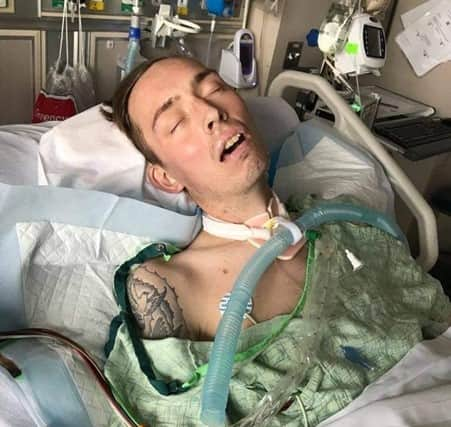
Luke was airlifted to Detroit for an emergency liver transplant and went on to suffer multi-organ failure. He also suffered a life-changing brain injury as a result of his critical illness and has now been left wheelchair-bound with permanent speech and vision problems.
A spokesperson for the trust has apologised, saying there is “no doubt that we should have monitored him for a longer period” and adding that they have since taken steps to learn from the experience.
Luke, originally from Thirsk in North Yorkshire, has now spoken out about the experience for the first time to warn others of the dangers of heat stroke and also share his determination not to be defined by his injuries.
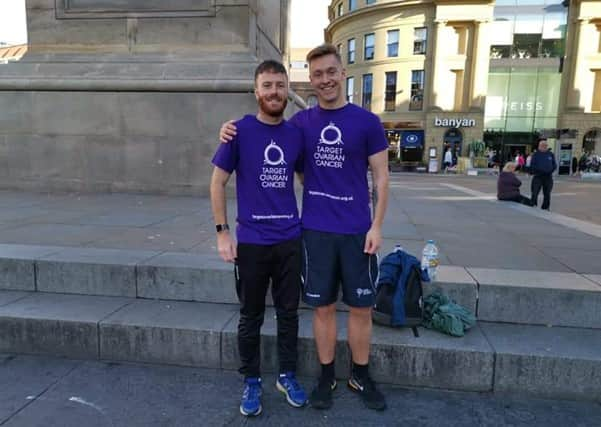
The then 25-year-old collapsed at the finish line and told medics he could not remember the last mile of the run. He said: “Before all this, I was an independent and active and was concentrating on my PhD and the future.
“I don’t remember the end of the Great North Run, just coming round in the tent afterwards. I knew I was in a bad way but when I was sent home from hospital that night I just trusted what I was told.”
In the days leading up to a trip to the USA to give a lecture as part of his studies, he developed flu-like symptoms. He still flew to the country but said: “I don’t really remember much after that and getting to hospital in the States.
“When I came round from my surgeries the gravity of what happened started to hit. I awoke a totally different person and one who couldn’t do anything for himself.”
After six weeks in hospital, he was flown back to the UK, spending nearly two years in hospital and a rehabilitation unit.
He said: “It’s almost impossible to find the words to describe what spending nearly two years in a rehab centre was like. I struggled to communicate and couldn’t event cut food up myself.
“There were a lot of dark and emotional times, but I was determined to try and reclaim some of my old life and re-starting my studies.”

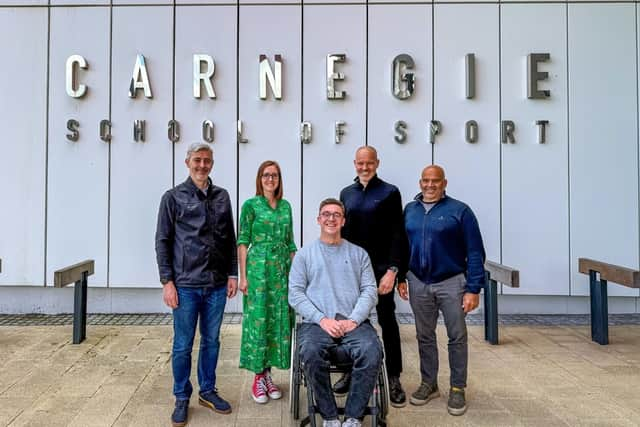
Luke managed to restart his studies and was recently awarded with a doctorate following the successful completion of his PhD. He is now aiming to get his work published in academic journals and plans to continue work as a research assistant,
“It has been a long haul with many setbacks and obstacles but obtaining my PhD will always be my proudest achievement”, he said. “I know my life hasn’t turned out as I thought but I’m so grateful to be alive and want to make the most of it. I can’t thank the doctors in America and the medical staff once I was back in the UK for everything they did for me.
“I still face many challenges with my speech, mobility, writing, memory, fatigue and anything that requires coordination. I’ve had to move to a home that has been adapted for my needs and to allow me to regain some, however big or small, independence back.
“I just hope that by sharing my story I can not only warn others of the dangers of heat stroke but also inspire people who may be going through a life-changing event that help and support is available and they can still achieve their dreams.”
Luke contacted medical negligence lawyers at Irwin Mitchell to investigate and help him access the ongoing specialist rehabilitation and therapies he requires.
South Tyneside and Sunderland NHS Foundation Trust, which runs South Tyneside Hospital, admitted a breach of duty in discharging Luke. It also admitted that given he had arrived at hospital with signs of heat stroke, he should have been monitored for 24 to 48 hours before discharging him was considered.
Tracy Tai, who has been representing Luke, said: “While the signs of heat exhaustion often pass, if they don’t they can turn into heat stroke, which is a medical emergency and can result in life-changing complications, such as in Luke’s case.
“The last few years have been incredibly traumatic for Luke and his family. Understandably they’ve had many questions and concerns about what happened, especially around the decision to discharge him from hospital on the evening of the Great North Run.
“We’re determined to ensure Luke has access to the specialist life-long support and therapies he requires to maximise his recovery.”
Following legal submissions the trust also accepted that if Luke had been kept in hospital, tests may have highlighted a gradual decline in his liver and kidney function and, if he had received treatment, the further damage could have been prevented.
However, the Trust denied it would have prevented him from suffering any kidney damage as it argued this was caused by heat stroke, and therefore even if he had remained in hospital it was likely he would have still suffered liver damage and required a transplant.
Luke’s neurological problems connected to his liver damage were not caused by the Trust’s breach of duty, it claimed.
Irwin Mitchell and the Trust are working to resolve the ongoing issues in the case.
Dr Shaz Wahid, Executive Medical Director of South Tyneside and Sunderland NHS Foundation Trust, said: “We are sorry that we did not keep Luke in hospital for longer when he arrived with us showing signs of heat stroke after taking part in the Great North Run.
“Although it is not clear whether this would have changed his overall health outcome, there is no doubt that we should have monitored him for a longer period of time and for that we wholeheartedly apologise.
“We have since taken steps to make sure our teams learn from Luke’s experience with further training introduced to ensure, as far as possible, we prevent this from happening again.”