
Offenders give back to community by supporting Sheffield animal shelter
Offenders serving community sentences are providing vital maintenance support to the RSPCA Sheffield Animal Centre, whilst developing practical skills to help them turn their backs on crime.
The self-funded charity has welcomed Community Payback support, with tough manual work needed to help maintain and renovate the two-storey centre and surrounding grounds. Work has included gardening, erecting a fence for a secure area, painting and building a large path.
Community Payback is a form of unpaid work that can be ordered by courts as part of a community sentence, making offenders repay to the communities they've harmed while serving their sentences.
The unpaid work requirements can also teach offenders valuable technical skills such as building repairs which can help with employability and developing a structured working-day routine.
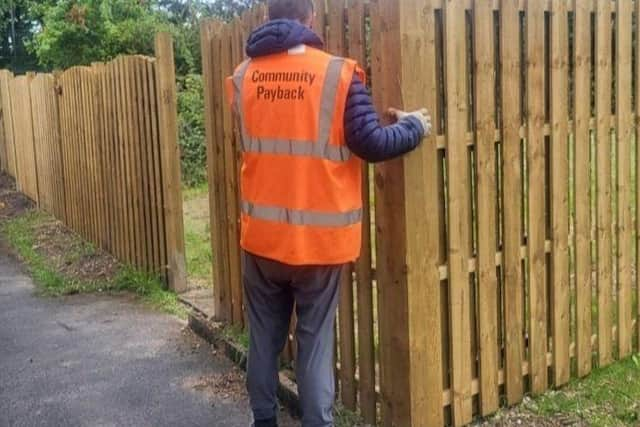

Community Payback staff from the Probation Service, who manage these projects, carefully match offenders to appropriate tasks based on their existing skills.
This approach meant the team supporting the RSPCA Sheffield Animal Centre identified an individual with bricklaying skills who was able to help build a path that was needed in the grounds of the centre.
Dawn Sampson, Head of Operations at the RSPCA Sheffield Animal Centre says:
"As a large, self-funding animal centre, without the support of the teams we would struggle to get some of these jobs done and not be able to afford the labour for others.
We thank the teams for their continued support and hard work, and we look forward to continuing to work with them.”
Community sentences are made up of thirteen possible requirements that offenders are expected to meet, including restrictions, tasks, and treatment programmes they must carry out in the community. Offenders can be given one of these measures, or a combination of a few, for a maximum duration of three years.
These types of sentences allow offenders to maintain family connections, employment and housing whilst while repaying their debt to society through tough unpaid work, which can help reduce reoffending.
Research shows that there is currently a higher reoffending rate (60%) of people on short custodial sentences, compared to people on community sentences (24.8%).
Courts can punish offenders by ordering them to carry out up to 300 hours of unpaid manual work. Through this there is the opportunity to gain valuable skills training that can help participants secure employment and break the cycle of crime.