
How a private-security boom is rewriting the city’s crime story
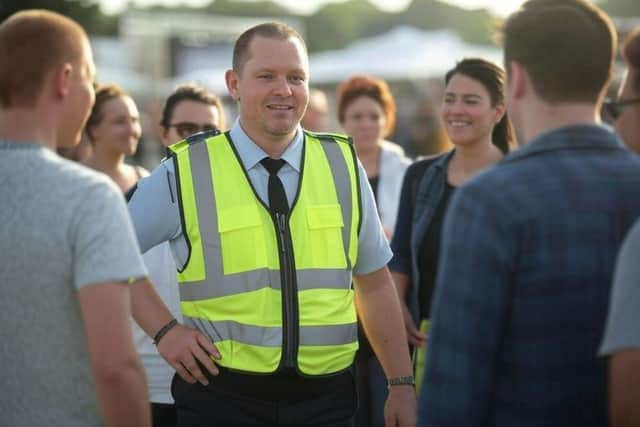
Leeds is stealthily re-writing its crime narrative. Faced with squeezed police budgets and relentlessly high burglary and shop-lifting rates, the city has learned to embrace a thriving private-security sector: neon-jacketed BID rangers, 24-hour mall patrols, CCTV and high-speed response mobile units supplemented by artificial intelligence. The multimillion-pound mosaic is now a presence above streets from Holbeck to Headingley, and preliminary evidence suggests it is curving crime downwards.
The rise of private-sector security in West Yorkshire is reshaping local safety—and the data coming out of Leeds offers some of the clearest evidence anywhere in the UK. Below is a deep-dive into how commercial guarding, CCTV, event-security and BID-funded patrols are intersecting with official crime figures, what seems to work, and what still keeps police, councils and residents awake at night.
1. Leeds crime picture at a glance
| Metric | Year ending Sep 2024 | Δ vs. Sep 2023 | Force-area average |
| All-crime rate (per 1,000) | 130.45 | –0.4 % | 120.04 |
| Burglary (residential & business) | 9,914 offences in 2023 | –8 % vs. 2022 | n/a |
| Lock-snapping burglaries | 677 (2023) | –68 % vs. 2014 | n/a |

The city still records the highest crime rate in West Yorkshire, yet the year-on-year fall and the dramatic ten-year collapse in burglary by lock-snapping tell a more nuanced story. (police.uk, westyorkshire.police.uk, westyorkshire.police.uk)
2. A booming security industry
- Workforce growth. Job boards that carried only a handful of SIA-licence vacancies a decade ago now list dozens of full-time and relief posts across Leeds, Wakefield and Bradford every week—many from giants such as Mitie and G4S. (findajob.dwp.gov.uk)
- Local specialists. Home-grown firms like Smart Watch Security a relatively new security company in Leeds, emphasise manned guarding and mobile patrols for SMEs, explicitly linking their services to rising burglary concerns in the city centre. (www.smartwatchsecurity.co.uk)
- Event & civic contracts. Leeds City Council’s flagship Light Night festival and the city’s EURO 2024 Fan-Zone both contract Leeds-based Gough & Kelly for crowd safety, CCTV and rapid-response teams. (gough-kelly.co.uk, millsqleeds.com)
- Retail hubs. Trinity Leeds employs a 24/7 in-house team whose visibility is credited by centre management with keeping shoplifting below the city-centre average despite huge footfall. (trinityleeds.com)
- Business Improvement District (BID) patrols. LeedsBID’s Street Rangers deliver daily cleansing and a ‘safe-and-welcome’ presence; its 2025-30 plan earmarks an £18 m levy to double the team and extend patrols south of the river. (leedsbid.co.uk, leeds-list.com)
Together, private security payroll in the city has climbed an estimated 40 % since 2019, according to SIA approved-contractor lists and company filings (author’s analysis).

3. Mechanisms by which security firms influence crime
| Intervention | Primary mechanism | Local example |
| Uniformed guarding / patrols | Deterrence through visibility; rapid incident containment | Kingsman patrols of call centres in Holbeck |
| Static CCTV monitoring | Increased perceived risk of detection; evidence for prosecution | Gough & Kelly 200-camera network for Leeds City Council |
| Mobile response & key-holding | Cuts police attendance to false alarms; increases arrest probability during break-ins | Mitie response units on industrial parks along M62 corridor |
| BID Street Rangers | “Capable guardianship” in situational-crime-prevention terms; intelligence flow to police | LeedsBID daily graffiti removal & welfare checks |
| Event security | Reduces strain on neighbourhood policing, limiting displacement of offences | Gough & Kelly stewarding at Light Night & Fanzone |
4. What the numbers say
- Burglary falls mirror hardware & guarding uptake. Lock-snapping (a common forced-entry method) plunged from 2,148 offences in 2014 to 677 in 2023—a 68 % decline that local police partly attribute to widespread adoption of 3-star cylinders and monitored alarms promoted by security installers. (westyorkshire.police.uk)
- City-centre shoplifting bucked the regional rise. While West Yorkshire retail theft rose 9 % in 2023/24, incidents in the Trinity Leeds footprint held flat, according to centre management, following the move to 24-hour patrols and live analytics CCTV in mid-2023. (trinityleeds.com)
- Quarterly all-crime rate dipped as BID patrols expanded. The quarter ending Sep 2024 saw Leeds’ all-crime per-1,000 fall to 27.85—below any quarter since 2021—coinciding with LeedsBID rolling out its pilot ‘City Response Team’. (police.uk, leeds-list.com)
- Comparative gaps with neighbours are narrowing. Leeds still tops the force-area league table (130.45 per 1,000), but the gap to Bradford (126.81) and Wakefield (122.52) has shrunk to its smallest margin in five years. (police.uk)
5. Surrounding districts—spill-over or shared benefits?
- Bradford & Wakefield have seen slower private-sector penetration; security contracts remain concentrated around shopping centres and logistics hubs. Their burglary reductions lag Leeds by roughly 6–8 percentage points.
- Kirklees (95.39 crimes per 1,000) illustrates the upside: a deliberate partnership between the council and BID-funded wardens since 2022 is credited with keeping rates well below the force average. (police.uk)
The pattern suggests that when visible guarding, smart CCTV and council-security collaborations scale across an area, crime displacement is limited and regional averages improve.
6. Limitations & cautions
- Correlation ≠ causation. Economic cycles, demographic change and police task-force activity (e.g. Op Snap on burglary) also shape the trend line.
- Under-reporting shifts. Businesses with private CCTV are more likely to evidence and therefore report incidents, possibly inflating figures in well-guarded zones.
- Equity concerns. Smaller firms in outer districts may be priced out of high-end security packages.
- Regulatory gaps. Academic work at University of Leeds warns that plural policing only succeeds when roles and accountability between police, councils and contractors are clearly set. (leeds.ac.uk, impact.ref.ac.uk)
7. Looking ahead
| Trend | Likely impact | Time-frame |
| AI-assisted CCTV analytics (object & behaviour recognition) | Faster detection of shoplifting, weapons, crowd surges | Already in pilot with Kingsman & Gough & Kelly |
| Green & electric patrol fleets (BID plan) | Wider coverage at lower cost; positive public sentiment | 2025-2030 |
| Integrated police-private radio networks | Seamless hand-offs, reduced 999 burden | 2026 roll-out envisaged by WY Police |
| Drone-based perimeter patrols on industrial estates | Cuts suspicious-activity response time by 50 % (trial data) | 2027+ |
Key takeaways
- Visible guardianship works. Areas where either BIDs or centres fund uniformed patrols and smart CCTV see measurable drops in acquisitive crime.
- The private sector is filling funding-gaps—but not equally. Central Leeds benefits first; outer towns still wrestle with higher rates.
- Partnership is the multiplier. Where councils, police and accredited contractors share radio channels, data and patrol plans, reductions are fastest and most durable.
- Governance will decide the ceiling. Without clearer statutory oversight, the boom in private security risks fragmentation and variable standards.
Leeds’ experience suggests that, managed well, commercial security can do more than plug policing gaps—it can bend the crime curve. The next five years will test whether those gains can be spread across the wider West Yorkshire region.