
Manufacturers could speed up investment in robotics
Covid-19 could be a catalyst for the manufacturing sector to accelerate investment in automation and robotics as companies adapt to government-guided health and safety measures, according to an industry expert.
Steve Crow, business development director at Leeds law firm Clarion, said over the last six months businesses have started to move towards automation as the technology becomes more affordable.
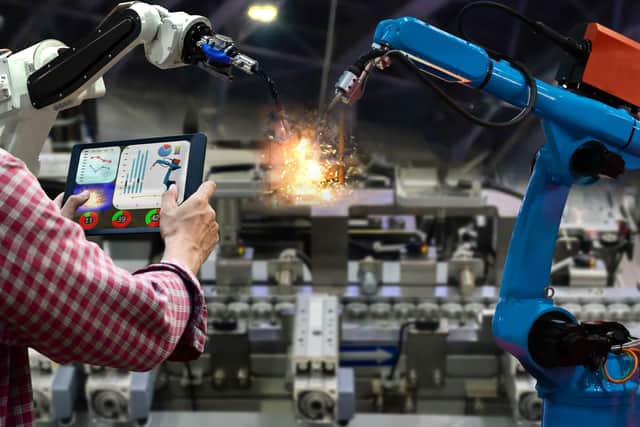

However, the volatility of the pandemic has increased the urgency for further digital transformation, also known as Industry 4.0 – the fourth industrial revolution.
The manufacturing group Make UK and Santander bank predicts that manufacturing will not return to its pre-coronavirus growth figures until 2022. It said that the impact of the pandemic on the manufacturing sector cost the economy a potential £35.7bn this year alone.
As fewer employees return to the workplace post-Covid, the demand to increase automation will be higher, Mr Crow said. “A lot of companies are thinking about using robotics and automation so that you don’t have to bring people into close proximity,” he added.
“If you think about a noisy manufacturing environment, often you’ll get two people putting their heads together around the machine and trying to work out what’s what.
“You can’t do that at the moment so you’re going to have to think about how to use handheld devices and technology systems that make it easier for people to communicate effectively on the factory floor.”
Manufacturing is reported to account for one in ten of all jobs in Yorkshire with a value of £7.7bn in the Leeds City Region alone.
Consultancy firms that are advising companies on how to implement this new technology in the workplace are seeing an increase in demand for their services.
Saltaire-based Cimlogic works with some of the world’s biggest manufacturing businesses to drive manufacturing productivity, particularly in the pharmaceutical and food and drink sectors.
Chief executive Mike Hodge said: “The demand to digitally transform has increased. Where businesses once had a five-year roadmap to digitise their portfolio of factories, it is starting to have a bit more urgency to it.
“People have got a bigger awareness of the need to be able to have access to real-time data whilst they’ve been working remotely.”
He added: “The ability to use wireless tablets and so on has become really important in recent weeks.
“Businesses are also realising they need to be more efficient and less labour intensive.”
Mr Hodge believes that in the manufacturing sector automation will lead to employees moving to roles that require a higher level of skill.
“I don’t think it’s a direct correlation that means robots equals less jobs. I think the adage is that it’s the same number of people but they have better jobs,” he said.
The UK is still a long way behind Germany when it comes to digitally transforming the manufacturing industry. Bosch RexRoth, KUKA Robotics and Siemens AG are all global leaders in automation.
But Mr Crow believes that the gap could start to narrow. “Will this be a catalyst for more companies gearing up to automate processes?” he asked.
“Six months ago we were starting to see an increase in automation and robotics because the cost of that investment was coming down and so the payback period was reducing.
“Covid-19 may be that extra push businesses need to start investing in transforming their digital capabilities.”