
'I ditched law to build an app after being short-changed at work - now my Leeds business is thriving'

She used a £5,000 future wedding gift to get her business off the ground
A Leeds entrepreneur ditched a potential career in law to build her own app after repeatedly being short-changed in jobs - and it's now been downloaded by more than 600,000 workers.
George Fairhall, 33, launched shift-tracking app wac after becoming fed up with trying to keep track of payments.
She wanted to give workers their own way of checking exactly what they had earned and somewhere to keep variable income in one place.
The idea came after years of juggling hourly-paid jobs with her studies - only to repeatedly look at her payslips and wonder where her money had gone.


George worked many jobs, from McDonald's and chain bars to agency shifts, and while studying law, she was sometimes putting in 40 to 50 hours a week just to support herself.
She said: "I remember looking at my payslip and just knowing it wasn't right, but when you're working so many hours and finishing at different times, it's really hard to keep track and prove.
"I needed every penny of that money. It almost became normal to look at your wages and think, 'that seems a bit short', but then carry on because you're exhausted.
"I eventually thought, why am I having to guess what I'm going to be paid and try to add it up myself, just to see what to expect on payday - or whether it was even right."
Her suspicions deepened when she took on a sales role at one of the bars where she worked and got a closer look at how staff hours were recorded and often assumed.

She saw occasions where working time could be rounded down, overtime and breaks missed - and where employers just had poor systems in place.
Her final straw came when she says an agency left her a couple of hundred pounds short.
George said: "I'd spent years having that horrible feeling on payday that something wasn't right. I used to call it payday panic!
"I started thinking there must be an app where I could put my rota in, record when I actually finished and know roughly what should land in my bank account.
"When I realised there wasn't anything doing exactly what I needed, I thought: I'll build it myself."
She had no tech background and her earliest version was little more than an idea on paper.
Her parents had saved £5,000 as a future wedding gift, which George instead used to help get the business off the ground.
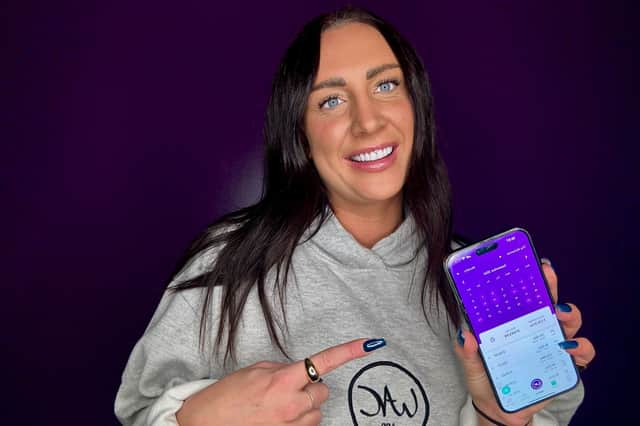
She said: "My mum and dad had put away the cash for me to get married one day and I basically said, 'can I have it now to build an app instead?'
"Thankfully they trusted me. I was a woman on a mission; I threw myself in and learnt quickly how to be resourceful and find support."
George eventually found an outsourced development team to support her mission - only for wac to launch in 2020, one week before Britain went into lockdown.
Rather than abandon the idea, she kept going and at one stage contacted around 2,000 potential investors through LinkedIn, helping her raise £70,000 during the pandemic.
And despite being advised that moving to London would make raising tech investment easier, George chose to keep building wac from Leeds.
She said: "I never wanted to feel like you had to leave the north to build a serious technology company, even though I was beginning to realise it was much harder.
"Instead, I utilised the fact I could be a stand-out business in the north - and we were noticed and taken seriously very quickly.
"Leeds has an amazing tech community and being able to grow the team and bring investment into the city is something I'm really proud of."
The gamble has paid off - as wac now has more than 600,000 workers using the platform, who have collectively logged around 17 million shifts.
The team have also recently launched 'wac for Business' after understanding how chaotic it can be for firms - with many still using paper, diaries and Excel to keep track, or expensive systems that don't work.
George said she wants to start helping businesses and workers come together on one working, transparent system.
The business has raised more than £1.5 million in investment.
George's own research suggests the problem she experienced remains widespread.
An in-app survey answered by more than 22,000 wac users found 45 per cent said they had been underpaid or experienced underpayment previously.
Another 40 per cent said they did not trust their employer to pay them correctly.
George said: "Those numbers don't surprise me because we hear stories from workers every single day.
"We've heard from people working 60 or 70-hour weeks who say they were still losing an hour or two of pay at the end of shifts and only realised how much it had added up to once they started tracking it.
"We've also had people come to us after hundreds of pounds were suddenly taken from their wages over alleged payroll mistakes, leaving them struggling to pay rent while they tried to prove what they had actually worked.
"In one case, someone was even made to cover a customer's drinks bill after they walked out without paying.
"These aren't tiny mistakes when you're living payday to payday. Losing £100, £300 or £600 can completely derail somebody's month.
"Only a very small amount of employers are sadly taking advantage of a broken system, but most are not deliberately trying to rip people off.
"A huge amount comes down to old systems, complicated rotas and genuine human error.
"But whether it's deliberate or accidental doesn't really matter to the person who's short on payday. It's not good enough."
George now wants to take her company into its next stage of growth.
She said: "I started wac because I was the person staring at a payslip knowing something wasn't right and not having the evidence to do anything about it.
"Now hundreds of thousands of people can easily keep track of any type of variable income job and have a location-backed record sitting on their phone, which is quite mad when I think about where it started."