
Amazon primed to deliver 2,000 jobs in the region - here's how to apply


Amazon is planning to create 2,000 jobs in the region with the launch of a new cutting-edge fulfilment centre - part of a colossal £40bn UK investment.
APPLY NOW: Recruitment for Amazon’s Hull fulfilment centre has just gone live. To find out more and apply, visit www.jobsatamazon.co.uk.
In Yorkshire, more than 7,000 Amazon employees work across all aspects of the fulfilment process, from receive centres, through fulfilment and sortation centres, to delivery stations.
Since the first Amazon Robotics fulfilment centre in the UK was opened in Doncaster, in 2015, Yorkshire continues to benefit from Amazon’s growth and innovation.
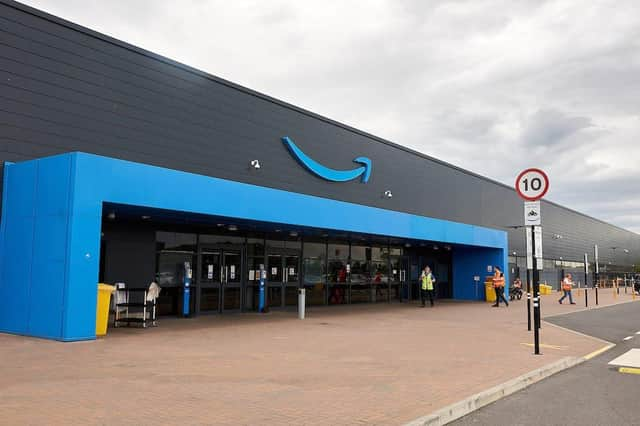
As part of Amazon’s plans to invest £40 billion in the UK over the next three years (2025-2027), a new state-of-the-art fulfilment centre will open in Hull.
It aims to create 2,000 more jobs for the region when it opens, increasing the £3.8 billion that the company has invested in Yorkshire and the Humber since 2010.
Since 2010, Amazon UK also has contributed more than an estimated £3.7 billion to the region’s GDP.
How does the overall fulfilment process work?
Yorkshire is the only county in the UK where you will find a building from each part of the Amazon fulfilment network.
Doncaster is the only location in the UK where you will find an Amazon receive centre, fulfilment centre and delivery station. And Leeds is the only location in the UK where you will find an Amazon fulfilment centre, sortation centre and delivery station.
Combining advanced logistics, innovative technology and dedicated employees in these buildings, the process of fulfilling an Amazon order is easier than you think.
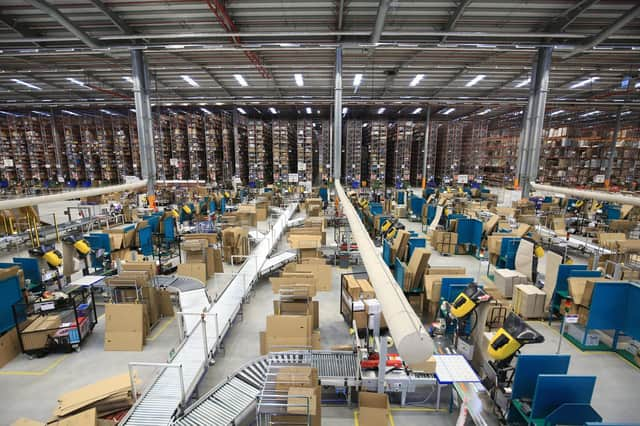
Before you – the customer – can see what you want to buy on the amazon.co.uk website, the product is checked into the Amazon system. This takes place at a receive centre. There are two receive centres in the UK, one in Coventry and one on Doncaster’s iPort.
Most products held in the Amazon network belong to other businesses, ranging from sole traders through to multi-nationals, and all these businesses send their goods to one of the two receive centres.
Yorkshire and the Humber, for instance, has over 6,600 SME selling partners that benefit from use of Amazon’s logistics network. Small business from the region selling on Amazon recorded over £180 million of export sales in 2023.
Products aren’t held for any length of time at a receive centre – they’re checked and then sent via heavy good vehicles (HGVs) to Amazon UK’s network of fulfilment centres. In Yorkshire, there’s a fulfilment centre on Doncaster’s iPort, another in Wakefield and, most recently, in Leeds.
When the product reaches the fulfilment centre and is stowed away, you can buy the item, and your order is processed. Once ordered, your item is transported from the fulfilment centre to a sortation centre – there’s a large, robotics sortation centre in Leeds – which looks after a large geographic area.
From the sortation centre, the product is taken to a delivery station which looks after a smaller geographic area, and from there it’s delivered to your door. All this can be done to ensure next-day – and in some areas and instances same-day – delivery.
The fulfilment centre
Fulfilment centres are where the products you see on amazon.co.uk are held. There are more than 30 fulfilment centres across the UK, and they are categorised based on the size of product they deal with.
Most items on amazon.co.uk are small. This means that most fulfilment centres deal with smaller items that fit into small boxes known internally as totes. Larger items are looked after in different types of fulfilment centres like the one on Doncaster’s iPort where team members use specialised, powered industrial equipment to move products.
Regardless of the size or type of product or the building in which it is held, the overall fulfilment centre process is the same.
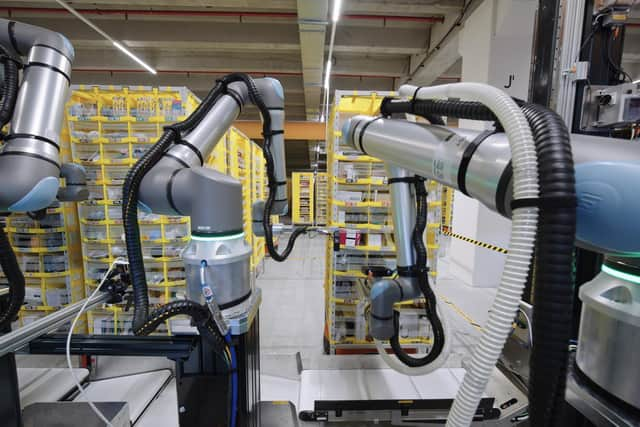
Products arrive from a receive centre, they’re checked and then sent to be stowed away. The product could be put on a shelf with the help of robotics in the case of smaller items or, for larger items, with the help of powered industrial equipment.
When a customer order is placed, a team member picks your item from a shelf with the assistance of robotics or powered industrial equipment. The product then goes from that pick station to the pack area where it is packaged. From there, it’s checked and addressed before leaving the fulfilment centre and makes its way to you.
READ MORE: